In the ever-evolving digital age, the mastery of visual communication has become paramount across various fields, from content creation and marketing to presentations. This article delves into the significance of visual communication, emphasizing its relevance in 2023. We will explore the role of creativity in visual communication, its impact on effective communication, and the tools and techniques that can aid in mastering this vital skill.
Visual communication refers to the art of conveying information through visual elements like images, graphics, and videos. In 2023, this skill has never been more crucial. With the digital landscape inundated by an abundance of content, capturing and retaining audience attention demands effective visual communication.
Content creators wield the power to engage and educate audiences. Visual communication skills for professionals encompass not only the ability to craft compelling visuals but also to harmonize them with textual content. In the age of video content, mastering visual communication is a prerequisite for content creators looking to make a significant impact.
Visual marketing is a field where the art of visual communication shines brightly. Visuals are the linchpin of successful digital marketing campaigns. Whether it’s creating eye-catching ads or developing shareable infographics, visual communication in marketing can make or break a brand’s online presence.
Effective presentations hinge on the adept use of visual communication techniques. Visual storytelling is a key aspect, as it allows presenters to engage their audience emotionally and intellectually. Visual design principles play a pivotal role in ensuring that information is presented clearly and memorably.
Visual Communication – What is it and why is it important?
The Fundamentals of Visual Communication
Visual communication is an indispensable facet of the modern world, shaping how we interact, learn, and engage with information. This comprehensive guide explores the fundamentals of visual communication, delving into core principles, the importance of mastering the basics and providing actionable tips for beginners. Let’s dive into the world of Visual Communication Mastery.
Visual Communication and its Core Principles
Visual communication, in its essence, refers to the art and science of conveying information, ideas, or emotions through visual elements. This includes but is not limited to visual design, graphic communication, and visual storytelling. At its core, it seeks to facilitate effective communication and engagement.
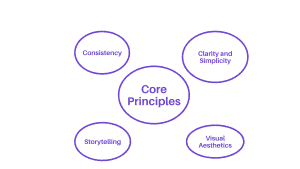
Core Principles:
Clarity and Simplicity: Effective visual communication hinges on the ability to convey complex ideas with clarity and simplicity. Distilling information to its essential elements ensures the message is easily understood.
Visual Aesthetics: Aesthetics play a vital role in capturing the viewer’s attention. It involves careful consideration of colour, typography, and layout to create visually appealing content.
Storytelling: Visual storytelling is the backbone of effective communication. Narratives that resonate with the audience are more likely to be remembered and shared.
Consistency: Maintaining a consistent visual identity across various media channels enhances brand recognition and fosters trust.
Mastering the Basics for Advanced Techniques
Before delving into advanced visual communication techniques, it is crucial to master the basics. Just as a house requires a strong foundation, advanced visual communication builds upon fundamental skills. For instance:
Understanding Design Principles: To create compelling visuals, one must grasp design principles such as balance, contrast, and hierarchy.
Digital Communication: Proficiency in digital tools and platforms is essential. This includes graphic design software, video editing, and animation tools.
Visual Engagement: Techniques for capturing and retaining audience attention are fundamental. This includes effective use of visuals, infographics, and multimedia elements.
Visual Strategy: Developing a well-thought-out visual strategy ensures that communication aligns with overarching goals.
Visual Communication Tips for Beginners
For those embarking on their visual communication journey, here are actionable tips:
Start Simple: Begin with straightforward visuals and gradually incorporate complexity as you gain confidence.
Learn from Examples: Analyze successful visual communication examples to understand what works.
Utilize Tools: Explore a variety of visual communication tools for graphic design, video editing, and data visualization.
Seek Feedback: Don’t hesitate to seek feedback from peers or mentors to refine your skills.
Stay Updated: Visual communication is ever-evolving. Stay informed about the latest trends and tools to remain competitive.
Advanced Visual Communication Techniques
Visual communication mastery is a crucial skill in today’s digital age. To excel in this field, one must explore advanced techniques that take visual communication to the next level. This section delves into the use of visual metaphors, symbolism, and storytelling in communication while highlighting the role of psychology in more impactful messaging.
Visual Metaphors and Symbolism
In the realm of visual communication, metaphors and symbolism serve as powerful tools. They help convey complex ideas and emotions through simple imagery. Visual metaphors, such as using a puzzle piece to represent unity, can instantly connect with the audience. Symbols, like a heart to signify love or a globe for global impact, create a universal language.
These techniques tap into the viewer’s subconscious, making the message more memorable and emotionally resonant. Effective visual communication requires a deep understanding of cultural and psychological associations, ensuring that the chosen symbols align with the intended message.
Storytelling in Visual Communication
Storytelling transcends verbal communication and extends to the visual realm. Effective visual storytellers craft narratives that engage the audience on a profound level. Whether through a single image or a series of visuals, storytelling captivates and leaves a lasting impression.
Visual storytelling encompasses a beginning, middle, and end, guiding the viewer through a narrative arc. This technique enhances viewer engagement and ensures that the message is not just seen but also comprehended and internalized.
Psychology in Visual Communication
The psychology of visual communication plays a pivotal role in conveying messages effectively. Understanding cognitive processes, emotions, and perceptual biases helps in crafting visuals that resonate with the audience. Here are a few key principles:
Colour Psychology: Colors evoke specific emotions and associations. For example, blue conveys trust and professionalism, while red can signify urgency or passion. Leveraging colour psychology can significantly impact how the message is received.
Gestalt Principles: These principles, such as proximity, similarity, and closure, explain how our minds naturally organize visual elements. Applying these principles ensures that visuals are structured in a way that makes sense to viewers.
Emotional Appeal: Emotional images, such as those featuring happy faces or heartwarming scenes, can elicit empathy and connection, making the message more impactful.
Framing: How a visual is framed can influence perception. Positive framing emphasizes benefits, while negative framing highlights consequences. Choosing the right framing is essential for effective communication.
Visual Communication for Content Creators
In the digital age of 2023, mastering visual communication is essential for content creators seeking to stand out and engage their audience effectively. Visual communication mastery encompasses a wide range of skills and strategies that enhance creativity in visual communication, ultimately leading to more compelling content. In this section, we will explore practical tips and strategies for incorporating visuals into blogs, videos, and social media.
Visual Communication Skills for Content Creators
Content creators must begin by honing their visual communication skills. Effective visual communication techniques involve understanding design principles and graphic communication fundamentals. This knowledge serves as the foundation for creating visually appealing and informative content. Embrace visual communication tools and software to streamline your workflow and produce high-quality visuals.
Visual Storytelling and Engagement
Visual storytelling is a powerful tool for content creators. By weaving a narrative through your visuals, you can captivate your audience and convey complex ideas effectively. Incorporate visual communication design principles to ensure your visuals align with your message. Use visual communication examples to illustrate concepts and make your content more relatable.
Visual Communication in Marketing and Business
Visual communication plays a pivotal role in modern marketing and business strategies. Content creators must understand its importance in brand marketing and business growth. Utilize visual marketing techniques to create compelling visuals that resonate with your target audience. Showcase how effective visual communication impacts the audience, highlighting its influence in advertising and digital marketing.
Visual Communication in Social Media
In the age of video content, social media platforms demand attention-grabbing visuals. To excel in social media marketing, content creators should master visual communication strategies. Explore trends in visual communication for 2023, such as the use of interactive visuals and visual aesthetics to enhance engagement. Emphasize the role of visual communication in web design and e-learning to adapt to changing digital landscapes.
Visual Communication Best Practices
Content creators, whether beginners or professionals, should adhere to visual communication best practices. These practices ensure that your visuals are not only visually appealing but also convey information effectively. Incorporate visual communication principles and theory into your content creation process. Strive to strike the right balance between visuals and text, catering to both visual and auditory learners.
Advanced Visual Communication Techniques
For those looking to take their visual communication to the next level, explore advanced techniques. Consider how audio visual training can enhance your skills and add depth to your content. Delve into advanced visual communication tools tailored for graphic designers, enabling you to create stunning visuals that set you apart.
Visual Communication in the Digital Age
The digital age demands constant adaptation. To succeed, content creators must embrace visual communication in the age of video content. As the landscape evolves, staying updated on visual communication trends is crucial. Continuously refine your visual communication strategies to keep your content relevant and engaging.
Visual Communication in Business Growth
Visual communication is an essential component of modern brand marketing, playing a pivotal role in creating lasting impressions, conveying messages, and engaging audiences. In this section, we will delve into the significance of visual communication in brand marketing, explain how businesses can enhance their branding through visual elements, and share success stories of companies that have mastered visual communication for growth.
Visual Communication in Brand Marketing
Visual communication mastery is integral to effective brand marketing in the digital age. It involves the skilful use of visual elements to convey messages and evoke emotions. This mastery extends beyond just aesthetics; it encompasses a deep understanding of design principles, digital communication, and effective communication techniques.
Enhancing Branding Through Visual Elements
Businesses can enhance their branding by harnessing the power of visual communication. Here are some strategies and techniques to achieve this:
Visual Storytelling: Effective visual storytelling is key to captivating your audience. It involves using visual media, such as images and videos, to tell a compelling narrative about your brand.
Visual Marketing: Visual marketing goes beyond just advertisements. It involves integrating visually appealing elements into every aspect of your marketing strategy, from social media posts to email campaigns.
Visual Engagement: Engaging visuals can keep your audience’s attention and encourage them to interact with your content. Utilize visual engagement techniques like interactive infographics or polls.
Visual Strategy: Develop a comprehensive visual strategy that aligns with your brand’s goals and values. This strategy should guide the creation and deployment of visual content across various platforms.
Visual Aesthetics: Pay attention to the aesthetics of your visuals. Consistency in design, color schemes, and typography helps in creating a cohesive brand image.
Digital Communication: In the digital age, visual communication extends to websites and apps. Ensure that your digital interfaces are user-friendly and visually appealing.
Tools for Visual Communication
Visual communication mastery is a crucial aspect of modern business, web design, and e-learning. Effective visual communication not only enhances engagement but also conveys messages with impact. To achieve this mastery, graphic designers and visual communicators rely on an arsenal of essential tools and software. In this guide, we will delve into these tools, their role in creativity, and how they contribute to the dynamic landscape of visual communication.
Visual Communication Tools for Graphic Designers and Visual Communicators
Adobe Creative Cloud Suite: No discussion about visual design is complete without mentioning Adobe’s suite of software. Adobe Photoshop, Illustrator, and InDesign are the backbone of graphic design, enabling professionals to create stunning visuals, layouts, and illustrations.
Canva: Ideal for beginners and professionals alike, Canva simplifies graphic design with its user-friendly interface and a vast library of templates. It’s a go-to tool for quick and visually appealing content creation.
Figma: Figma offers collaborative design in real time. This cloud-based tool is perfect for teams working on visual design projects, making it easier to maintain design consistency.
Procreate: For digital artists and illustrators, Procreate on the iPad provides an intuitive platform for creating stunning visual content.
GIMP: An open-source alternative to Photoshop, GIMP offers a range of powerful features for image editing and graphic design.
Streamlining Creativity and Productivity
These tools empower visual communicators to streamline their creative process and boost productivity:
Templates and Presets: Most tools offer templates and presets, which expedite the design process, ensuring effective visual communication without sacrificing creativity.
Collaboration Features: Collaboration features in tools like Figma facilitate teamwork, allowing multiple professionals to work on a project simultaneously and providing real-time feedback.
Asset Libraries: Stock images, icons, fonts, and other assets within these tools save time and expand creative possibilities.
Visual Communication in the Digital World
The digital age has fundamentally transformed the landscape of visual communication, ushering in new paradigms and possibilities. In this fast-evolving realm, mastering visual communication has become more critical than ever.
Visual Communication in the Digital Age
In the digital age, visual communication is no longer confined to static images and text. It has evolved into a dynamic, multi-dimensional field, encompassing visual design, graphic communication, and visual storytelling. The advent of the internet and social media platforms has created an unprecedented demand for effective visual communication that captures attention in the blink of an eye.
Role of Video Content and Interactive Media
Video content and interactive media have emerged as game-changers in modern visual communication. Effective visual communication now involves harnessing the power of audio-visual training to create engaging and immersive experiences. Consider the rise of live streaming, where real-time interaction with viewers enhances engagement and deepens connections.
Examples of Successful Digital Campaigns
Dove’s Real Beauty Sketches: Dove’s campaign challenged conventional beauty standards. By utilizing video content, they conveyed a powerful message, promoting self-acceptance and empowerment. This campaign exemplifies the impact of visual storytelling in fostering positive social change.
Apple’s Product Launch Events: Apple’s product launches are masterclasses in visual marketing. Their use of high-quality visuals and interactive elements keeps audiences eagerly anticipating each announcement, showcasing the significance of effective communication in product marketing.
National Geographic’s Instagram: National Geographic’s Instagram account transports followers to breathtaking landscapes and diverse cultures through stunning visual content. It demonstrates the efficacy of visual engagement and consistent visual aesthetics in building a loyal following.
Visual Communication Mastery Techniques
To master visual communication in the digital age, professionals must adopt advanced visual communication techniques. These include creating visually appealing content for better presentations, leveraging visual communication tools for graphic designers, and embracing visual communication in web design and e-learning.
Conclusion
Mastering visual communication in 2023 and beyond is crucial for staying ahead in a digitally driven world. Visual communication mastery involves harnessing the power of design principles, creativity, and effective communication. Whether you’re a content creator, marketer, educator, or business professional, enhancing your visual communication skills is non-negotiable.
Embrace Visual Storytelling: Visual storytelling is a potent tool for conveying messages. Incorporate it into your visual communication strategies to engage and captivate your audience effectively.
Prioritize Visual Design: Pay attention to visual aesthetics and graphic design. High-quality visuals enhance content and make it more shareable, ultimately boosting your digital presence.
Utilize Visual Marketing: Visual marketing is essential for promoting products or ideas. Incorporate visuals into your marketing campaigns to increase engagement and conversion rates.
Explore Digital Communication: In the digital age, mastering visual communication is paramount. Leverage digital tools and software to create compelling visuals that resonate with your target audience.
Stay Updated on Trends: Visual communication trends evolve rapidly. Keep up-to-date with the latest techniques and tools for staying competitive in your field.
Educational Integration: Visual communication isn’t limited to marketing; it plays a significant role in education. Educators can use visuals to enhance learning experiences and make complex concepts more accessible.
Visual Communication in Business: Businesses can benefit from effective visual communication in brand marketing, web design, and e-learning. It fosters growth and strengthens brand identity.
Impact on Audience: Understand that visual communication has a profound impact on your audience. Well-crafted visuals can evoke emotions, drive action, and leave a lasting impression.
FAQs
What are the key elements of visual communication mastery?
Key elements of visual communication mastery include understanding design principles, using colors and typography effectively, conveying a clear message, creating visually appealing content, and adapting to different mediums and audiences. Mastery also involves skillful use of imagery, layout, and visual hierarchy to guide viewer attention.
How does visual communication impact branding?
Visual communication plays a crucial role in branding by creating a visual identity that reflects a company’s values, personality, and message. Consistent branding elements, such as logos, color schemes, and design styles, help consumers recognize and connect with a brand. Strong visual communication can enhance brand recognition, trust, and customer loyalty.
Can you recommend tools for improving visual communication skills?
Tools like Adobe Creative Suite (e.g., Photoshop, Illustrator, InDesign), Canva, Figma, and Sketch can help improve visual communication skills. Online courses and tutorials from platforms like Coursera, Udemy, and Skillshare are also valuable resources for learning and honing design skills.
What are the latest trends in visual communication?
Current visual communication trends include minimalist design, bold and vibrant colors, 3D and immersive visuals, interactive content, and sustainability-focused designs. Mobile-first and responsive design approaches are also prevalent in today’s visual communication landscape.
How does visual communication differ from verbal communication?
Visual communication relies on images, graphics, and design elements to convey information, while verbal communication uses spoken or written words. Visual communication is often quicker to process and can transcend language barriers, but verbal communication allows for more nuanced and detailed expression.
How can I use visual communication in digital marketing?
In digital marketing, you can use visual communication through engaging images, videos, infographics, and interactive content. Strong visuals in social media posts, websites, and email campaigns can grab attention, convey messages effectively, and drive user engagement.
What are the principles of effective visual design?
Effective visual design principles include balance, contrast, alignment, repetition, proximity, and simplicity. These principles help create visually appealing and organized designs that effectively communicate a message.
What is the role of visual communication in education?
Visual communication aids in education by simplifying complex concepts, enhancing retention, and making learning more engaging. Visuals such as diagrams, charts, and videos help educators convey information effectively and cater to various learning styles.
How can businesses benefit from visual communication?
Businesses can benefit from visual communication by creating memorable branding, improving marketing efforts, simplifying complex information, and enhancing customer engagement. It can also help in conveying professionalism and credibility.
How does visual communication influence audience engagement?
Visual communication engages audiences by appealing to their senses and emotions. Well-designed visuals can capture attention, convey messages quickly, and create a lasting impact, leading to higher audience engagement and retention.
Are there any best practices for visual communication in advertising?
Best practices in advertising visual communication include using eye-catching visuals, incorporating branding consistently, focusing on the target audience, conveying a clear message, and ensuring the design is mobile-friendly.
How can I enhance my visual communication skills as a graphic designer?
To enhance your visual communication skills as a graphic designer, practice regularly, study design theory, seek feedback, stay updated on industry trends, experiment with different styles, and collaborate with other designers.
What is the significance of visual communication in modern business?
Visual communication is significant in modern business because it helps convey messages effectively in a visually saturated world. It aids in building brand recognition, establishing trust, simplifying complex information, and increasing engagement with customers and clients.
Can you suggest techniques for better visual storytelling?
To improve visual storytelling, focus on creating a narrative with a clear beginning, middle, and end. Use compelling visuals that evoke emotions, maintain consistency in style, and choose a central theme or message to guide your story.
How does visual communication affect content marketing?
Visual communication enhances content marketing by making content more engaging and shareable. Infographics, images, and videos break up text, making it more digestible. Visuals also help convey complex information, increasing the effectiveness of content marketing strategies.
In today’s fast-paced and competitive world, achieving optimal productivity is essential for individuals and businesses alike. The ability to efficiently manage time, focus on tasks, collaborate effectively, and achieve goals plays a crucial role in success. One valuable tool that has revolutionized productivity is audio visual (AV) gear. This blog explores the importance of AV gear in enhancing productivity and efficiency, covering a range of topics related to technology, equipment, tools, and solutions that contribute to improved performance and work-life balance.Boosting Focus and Efficiency: AV equipment offers innovative solutions to improve focus and concentration, reducing distractions and increasing overall efficiency. By using audio visual tools for success, individuals can optimize their workflow, making multitasking more manageable and goal achievement more attainable.Facilitating Remote Work and Collaboration: With the rise of remote work, audio visual gear plays a critical role in facilitating seamless communication and collaboration among teams, regardless of physical location. Utilizing AV gear for virtual collaboration enhances teamwork and fosters creativity, making it easier to achieve project success.Workflow Optimization: Incorporating audio visual gear into daily routines enables effective project management and workflow optimization. AV gear for workflow optimization streamlines tasks, ensuring a smooth and productive working process.Time Management and Task Efficiency: Time-saving tips are essential in maximizing productivity. AV gear, designed for optimal performance, helps individuals better manage their time, prioritize tasks, and achieve work-life balance.Logitech + Microsoft Teams | Raising the Bar on Video Meetings Audio Visual Gear Buying GuideIn today’s fast-paced world, productivity is the key to success. Whether you’re a professional, content creator, remote worker, or team collaborator, having the right audio visual (AV) gear can significantly enhance your efficiency, focus, and overall performance. This comprehensive buying guide will explore various types of AV equipment, their features, and reputable brands to help you make informed decisions based on your needs and budget. Power of AV Equipment for Productivity Audiovisual gear goes beyond mere entertainment; it is a powerful tool that can revolutionize the way you work and interact. With the right AV setup, you can achieve optimal performance, seamless collaboration, and efficient time management in various scenarios, such as remote work, project management, and team meetings. Different Types of AV Gear Projectors: Ideal for presentations and large gatherings, projectors offer high-quality visual aids for better engagement. Monitors: From multitasking to content creation, a good monitor with high resolution and connectivity options can boost your productivity. Headphones: Noise-canceling headphones provide a focused work environment, enhancing your concentration and reducing stress. Cameras: For content creators and online teachers, high-quality cameras are essential to capture and share valuable information effectively. Microphones: Crystal-clear audio is crucial for virtual events, public speaking, and effective collaboration. Features to Consider Resolution: Higher resolution ensures clarity, which is essential for reading text, viewing presentations, or creating content. Connectivity Options: Look for AV gear with versatile connectivity to seamlessly integrate with your existing devices. Portability: Lightweight and portable equipment are convenient for remote work and on-the-go professionals. Compatibility: Ensure your AV gear works with various devices and software to avoid compatibility issues. Best Audio Visual Gear Under £500In today’s fast-paced world, where productivity and optimal performance are paramount, leveraging audio visual gear can make a significant difference in various aspects of work and life. In this section, we curate a list of the best audio visual tools and equipment under £500, highlighting their functionalities, benefits, and how affordability does not compromise quality and effectiveness. Whether you’re working remotely, collaborating with a team, managing projects, or seeking work-life balance, these audio visual solutions will elevate your efficiency, creativity, and overall productivity. Wireless Presentation Clicker Enhance Efficiency in Meetings and PresentationsA wireless presentation clicker is an indispensable tool for professionals giving presentations or collaborating remotely. With seamless connectivity and intuitive controls, it allows you to navigate slides effortlessly, freeing you from being tethered to your computer. Boost productivity by capturing and holding your audience’s attention with smooth transitions and confident control over your presentation flow. HD Webcam with Built-in Microphone Improve Collaboration and Remote WorkIn an increasingly remote work landscape, effective communication is key. An HD webcam with a built-in microphone ensures crystal-clear video calls, promoting seamless collaboration and eliminating communication barriers. Experience virtual meetings with a sense of presence and engagement, enabling effective teamwork and project management even across vast distances. Multi-Device Charging Station Optimize Workflow and MultitaskingA multi-device charging station helps declutter your workspace and manage multiple devices efficiently. With the ability to charge smartphones, tablets, and other gadgets simultaneously, it saves valuable time and keeps you connected and focused on your tasks. Stay organized and maximize productivity by eliminating the need to search for charging outlets or untangling cables. Noise-Canceling Headphones Boost Focus and MindfulnessAchieving optimal productivity often requires a quiet and distraction-free environment. Noise-canceling headphones create a personal oasis, blocking out external sounds and distractions. Whether you’re working on a project, engaging in creative tasks, or seeking moments of mindfulness, these headphones facilitate deep focus and reduce stress, leading to enhanced productivity. Portable LED Projector Enhance Presentations and CreativityA portable LED projector is a game-changer for professionals who frequently conduct presentations or creative workshops. With its compact design and versatility, you can bring your ideas to life anywhere, whether it’s in the office, at home, or on the go. Engage your audience with dynamic visuals and foster creativity in your brainstorming sessions. Video Conferencing Camera with 360-Degree View Facilitate Effective Meetings and TeamworkCollaborative discussions and teamwork thrive when all participants can interact seamlessly. A video conferencing camera with a 360-degree view ensures that everyone is visible and engaged during virtual meetings. This fosters a sense of inclusivity, leading to improved communication, effective decision-making, and goal achievement. Audio Visual Gear for Remote Work and CollaborationIn the ever-evolving world of remote work and collaboration, audio visual (AV) gear plays a crucial role in ensuring optimal productivity and efficient communication. With a myriad of tools and devices available, remote teams can enhance their workflow, teamwork, and project management, resulting in successful outcomes. This section explores the importance of
In today’s fast-paced business landscape, driving meeting success is paramount to efficient collaboration and achieving organizational goals. With the ever-evolving advancements in audiovisual (AV) technology, businesses have unprecedented opportunities to enhance meeting efficiency, communication, and overall productivity. Leveraging the power of AV technology in your conference room setup and remote work solutions can transform the way you conduct meetings and collaborate. AV technology plays a pivotal role in modern business communication, providing seamless interactions regardless of geographical constraints. By integrating audiovisual solutions, you can create an environment that facilitates virtual conferencing and remote collaboration. This integration allows teams to engage in productive discussions, share ideas, and make informed decisions, regardless of their physical location.Business conferencing has been redefined by the integration of AV equipment. High-quality video conferencing, presentation technology, and interactive displays empower participants to engage actively during meetings. This technology integration enhances digital communication, making presentations more captivating and discussions more interactive, ultimately leading to improved meeting efficiency.In the modern workplace, remote collaboration has become essential. AV technology enables advanced communication, allowing remote teams to work together seamlessly. Utilizing AV equipment enhances multimedia communication and promotes effective virtual presentations, thus maximizing productivity with AV equipment and promoting successful AV integration in meetings.Conference solutions today involve more than a simple projector and screen setup. AV technology has evolved to encompass interactive displays, smart meeting solutions, and enhanced AV equipment. These advancements streamline conference room technology, providing a dynamic environment for effective meetings. With proper AV integration, your conference room becomes a hub for creativity and problem-solving.Using Technology In Meetings The Evolution of Meetings and AV TechnologyBusiness meetings, once confined to physical boardrooms, have undergone a remarkable evolution in the digital era. This transformation is driven by the integration of audiovisual (AV) technology, revolutionizing the way meetings are conducted and reshaping the dynamics of communication and collaboration in the modern workplace. With the advent of remote work solutions and the need for seamless interactions, the role of AV technology in driving meeting success has become paramount.Challenges Faced in Traditional Meetings and the Call for InnovationTraditional meetings were often characterized by logistical challenges and limitations. Inefficient communication, geographical barriers, and time constraints hindered the effectiveness of these gatherings. The demand for meeting efficiency and enhanced collaboration spurred the development of innovative solutions. This is where AV integration stepped in, offering a transformative approach to business communication and collaboration tools.Maximizing Productivity with AV Equipment: A Paradigm ShiftThe concept of “Maximizing productivity with AV equipment” has become the cornerstone of modern meetings. The integration of audiovisual technology has enabled businesses to break free from the constraints of physical presence. Remote work solutions and virtual conferencing tools have facilitated seamless interactions, enabling teams to connect regardless of their geographical locations. This advancement has not only streamlined conference room setups but also elevated workplace productivity to unprecedented heights.Audiovisual Technology: Reshaping Meeting DynamicsIn the digital age, audiovisual technology plays a pivotal role in reshaping meeting dynamics. Interactive displays, multimedia communication, and advanced presentation technology have redefined the way information is shared and absorbed during meetings. The integration of AV equipment allows for enhanced presentations, making complex ideas more digestible and engaging for participants. This technology also fosters remote teamwork and collaboration, bridging gaps and enabling efficient decision-making regardless of physical proximity.Driving Meeting Success with AV Technology: Strategies for ImplementationTo drive meeting success with AV technology, businesses must focus on AV solutions for effective meetings. By embracing virtual presentations and employing audio-video tools, companies can boost the impact of their meetings. Successful AV integration involves streamlining conference room technology and choosing the right AV equipment for business needs. Moreover, staying updated with AV technology trends in meetings ensures that businesses remain at the forefront of innovation.Enhancing Virtual Meetings: Mastering Remote CollaborationThe era of remote collaboration demands mastery over virtual meetings. AV technology facilitates remote teamwork by providing the means for seamless communication and sharing of ideas. The use of interactive displays and communication technology fosters engagement and participation, ensuring that every team member’s input is valued. With AV solutions for effective meetings, businesses can overcome the challenges of distance and time zones, enabling teams to collaborate as if they were in the same room. Improving Virtual Meetings with AV TechVirtual meetings have become an integral part of the modern workplace, enabling remote collaboration and efficient business communication. However, they come with certain limitations that can hinder the effectiveness of communication and collaboration. The integration of Audiovisual (AV) technology offers transformative solutions to these limitations, revolutionizing the way meetings are conducted and maximizing productivity with AV equipment.Enhancing Virtual Presentations with AV Solutions for Effective MeetingsIn the realm of business communication and remote work solutions, AV integration plays a pivotal role in addressing the challenges of virtual meetings. One of the primary limitations of virtual meetings is the potential loss of non-verbal cues and engagement, which are crucial for effective interactions. Here’s where AV technology shines. High-quality cameras capture subtle facial expressions and gestures, fostering a sense of presence that bridges the gap between physical and virtual interactions.Boosting Meeting Impact through AV Technology IntegrationAudiovisual solutions empower remote teamwork by facilitating seamless interactions. Cutting-edge microphones capture crystal-clear audio, ensuring every participant’s voice is heard. Interactive displays transform virtual conferencing into dynamic experiences, allowing presenters to engage their audience through enhanced presentations. This level of engagement leads to better comprehension and retention, ultimately driving meeting success.“According to a survey by a leading technology research firm, companies that invested in AV solutions for conference room setups experienced a 30% increase in meeting efficiency and participant engagement. Furthermore, organizations reported a 25% improvement in collaboration and decision-making processes after integrating AV technology.”Streamlining Conference Room Technology for Remote CollaborationIncorporating AV equipment also contributes to workplace productivity. AV technology trends in meetings reveal that companies embracing AV solutions witness an uptick in communication technology integration. Video conferencing with high-quality cameras and presentation technology minimizes communication barriers, facilitating smooth information exchange and idea sharing across teams.Mastering Remote Collaboration with AV SolutionsSuccessful AV integration isn’t just about hardware; it’s about
As the world rapidly evolves, so does the nature of work. The rise of remote work has sparked a revolution in the way businesses operate and employees collaborate. This blog post aims to explore the importance of collaboration in remote teams, focusing on effective strategies, tools, and techniques that can unleash the full potential of remote work collaboration.Collaboration is a driving force behind remote work productivity. When team members collaborate effectively, they can leverage each other’s skills, knowledge, and perspectives to achieve common goals. By utilizing collaboration tools and techniques, remote teams can streamline workflows, eliminate redundancies, and boost overall efficiency.Maintaining strong communication and effective management within remote teams is essential. Remote collaboration platforms and software enable seamless communication and real-time collaboration, bridging the physical distance between team members. Implementing remote team management strategies that promote open and transparent communication channels fosters trust, engagement, and productivity.A strong remote work culture is a catalyst for collaboration and team cohesion. Remote team members, spread across different locations, can foster a sense of belonging and unity through shared values and collaborative practices. Encouraging virtual collaboration, celebrating achievements, and promoting a supportive work environment contribute to a positive remote work culture.Remote work brings unique challenges that can hinder collaboration. However, with the right collaboration solutions, these challenges can be addressed effectively. Remote collaboration tools, such as video conferencing platforms, project management software, and virtual whiteboards, facilitate collaboration despite geographical barriers. Implementing remote work best practices, such as setting clear goals, establishing regular check-ins, and providing adequate resources, helps overcome these challenges.Top 5 Absolutely Essential Remote Work Tools Understanding Remote Work CollaborationRemote work collaboration has become increasingly prevalent in today’s modern work landscape. As businesses embrace flexible work arrangements, it is crucial to understand the concept of remote work and the importance of collaboration in this context. In this section, we will explore the definition of remote work and collaboration, highlight key trends and statistics, and discuss the benefits associated with remote work collaboration.Remote work refers to a work arrangement where employees can perform their tasks outside of a traditional office environment. It enables professionals to work from home, co-working spaces, or any location of their choice, leveraging technology to stay connected and productive.Collaboration, on the other hand, involves individuals or teams working together to achieve common goals. In the context of remote work, collaboration strategies are employed to foster effective teamwork, even when team members are physically separated.Key Trends and Statistics in Remote Work Remote work has experienced significant growth in recent years, and its popularity continues to soar. Here are some key trends and statistics: The number of people working remotely at least part of the time has been steadily increasing, with a sharp rise in remote work due to the COVID-19 pandemic. According to a survey, 82% of remote workers reported lower stress levels, while 80% experienced improved morale. Remote work can contribute to reduced operational costs for businesses, including expenses related to office space, commuting, and utilities. “Research indicates that remote work can enhance employee productivity, with 65% of respondents reporting increased focus when working remotely.” Benefits of Remote Work Collaboration Effective remote work collaboration offers numerous advantages for both employees and businesses. Let’s explore some key benefits: Unleashing the Potential of Remote Teams: Remote collaboration techniques help unlock the full potential of remote teams by fostering effective communication, knowledge sharing, and idea generation. Leveraging collaboration tools and platforms enables seamless virtual collaboration, leading to enhanced productivity and innovation. Boosting Remote Work Productivity: Collaboration tools play a vital role in enhancing remote work productivity. They facilitate real-time communication, file sharing, task management, and project tracking, enabling teams to work together efficiently regardless of physical distance. Remote team management also becomes more streamlined through effective collaboration software. Cultivating a Strong Remote Work Culture: Remote work culture is an essential aspect of fostering a positive and engaging work environment. Remote collaboration fosters a sense of belonging, team cohesion, and shared goals. By implementing remote work culture-building strategies, organizations can create a supportive and inclusive atmosphere for their remote teams. Overcoming Remote Work Challenges: Remote work comes with its own set of challenges, such as potential communication gaps, lack of face-to-face interaction, and difficulties in establishing work-life boundaries. However, by employing proven collaboration techniques, these challenges can be mitigated, leading to a smoother remote work experience. Overcoming Remote Work Collaboration ChallengesAs remote work becomes increasingly prevalent, collaboration among team members can pose unique challenges. Effective remote collaboration is essential for achieving productivity and maintaining a cohesive working environment. In this section, we will explore common challenges faced by remote teams and discuss strategies to address communication and coordination issues, as well as mitigate the impact of time zone differences.Communication and Coordination IssuesRemote work collaboration heavily relies on effective communication and coordination. However, distance and technological barriers can hinder seamless interaction among team members. To overcome these challenges, consider implementing the following strategies:Embrace Remote Collaboration TechniquesUtilize proven collaboration techniques tailored for remote work environments. This includes leveraging virtual collaboration tools and platforms that facilitate real-time communication, file sharing, and project management. By embracing these technologies, remote teams can enhance their ability to collaborate efficiently and unleash their full potential.Foster a Remote Work CultureCultivating a strong remote work culture is vital for fostering effective collaboration. Encourage open communication, trust, and transparency among team members. Establishing regular virtual meetings, team-building activities, and sharing success stories can help create a sense of belonging and motivate individuals to actively contribute to the team’s objectives.Mitigating the Impact of Time Zone DifferencesTime zone variations can be a significant obstacle for remote teams working across different regions. Here are some strategies to mitigate the impact of time zone differences:Establish Overlapping Work HoursIdentify core working hours where team members from different time zones can align and collaborate in real-time. By establishing overlapping hours, remote teams can enhance communication and resolve urgent matters promptly, minimizing delays and improving productivity.Document and Share InformationTo ensure seamless collaboration despite time zone differences, emphasize the importance of documenting
In today’s fast-paced professional landscape, audiovisual expertise stands as the cornerstone of success. With technology evolving at an unprecedented rate, mastering advanced audiovisual skills is not just an option but a necessity. This blog delves deep into the realm of audio visual training, emphasizing its pivotal role in experiential education and hands-on training. Let’s embark on a journey where expert guidance through audiovisual means isn’t just a choice, but the key to unlocking unparalleled success in the world of AV technology.In an era where visual learning methods are surpassing traditional modes of education, practical skills in AV technology are invaluable. The demand for specialized training programs, offering immersive learning experiences, is at an all-time high. With expert-led AV education becoming the norm, professionals are not just acquiring knowledge; they are mastering the art of AV technology. Guided learning solutions in AV are designed to enhance AV proficiency, providing interactive visual learning experiences that cater to the needs of the modern learner.This blog serves a vital purpose for individuals seeking practical expertise in AV technology. By exploring advanced audiovisual skills training, hands-on AV expertise courses, and specialized AV training programs, readers gain insights into the immersive expertise training online. Our focus is on expert-guided immersive learning, where experiential AV education for professionals becomes more than just a concept; it becomes a reality.Delving into the depths of audiovisual mastery, our content navigates the complexities of AV skills development. Through immersive AV education programs and expert-guided hands-on AV training, individuals not only gain practical expertise but also understand the intricacies of AV technology. Interactive visual education programs facilitate the learning process, ensuring that learners grasp the concepts effectively. Data, when applicable, is presented in easy-to-understand tables, ensuring that readers can absorb complex information effortlessly.Impression AV our expertise The Evolution of LearningIn the ever-evolving landscape of education, the shift from conventional classroom settings to hands-on AV expertise courses and specialized training programs has been nothing short of transformative. This shift has been facilitated by technology, ushering in a new era of experiential education, guided learning, and immersive learning experiences. The Role of Technology in Shaping LearningThe integration of technology into education has been a driving force behind the evolution of learning. In the past, traditional learning methods relied heavily on textbooks and lectures, which often left learners passive and detached. Today, we have immersive learning experiences that make use of AV technology, providing a dynamic and engaging way to acquire knowledge.Immersive Learning: A New ParadigmImmersive learning is at the forefront of the educational revolution. It involves interactive AV training that places learners at the center of the learning experience. Through audiovisual expertise training, students can engage with the subject matter in a way that traditional methods could never replicate. This method caters to different learning styles, such as visual learning, making it more effective and enjoyable for a broader range of students.Guided Learning SolutionsExpert guidance plays a pivotal role in the evolution of learning. Expert-led AV education ensures that students receive the most up-to-date and relevant information. Whether it’s in the form of hands-on AV expertise courses or specialized AV training programs, expert guidance through audiovisuals ensures that learners are on the right path to mastery.Practical Skills and Specialized TrainingThe integration of AV technology has allowed for more practical skills development in fields that require specialized expertise. Whether it’s enhancing AV technology skills or offering specialized training in visual learning techniques, these programs provide learners with the tools they need to excel in their chosen field.Interactive AV TrainingInteractive AV training is a cornerstone of the modern learning experience. It provides learners with the opportunity to actively engage with the material, solidifying their understanding through hands-on expertise with AV. This approach is highly effective in enhancing experiential learning through AV.Advanced AV Skills DevelopmentWith the advent of experiential AV training, learners can advance their AV skills to levels previously unattainable through traditional methods. This practical AV knowledge enhancement is vital in a world where technology continues to play an integral role in various industries. Immersive Learning: Beyond the BasicsImmersive learning stands at the forefront of education, transforming the way we acquire audiovisual (AV) expertise. In this digital age, where audiovisual technology shapes our daily interactions, having specialized skills in AV technology is crucial. This section explores the concept of immersive learning, its significance in acquiring AV expertise, and the impact of interactive visual learning solutions on the learning process.Expert-Guided Immersive Learning: Mastering AV TechnologyIn the realm of audiovisual expertise, guided learning solutions are paramount. Expert guidance through audiovisual immersive learning experiences not only enhances practical skills but also accelerates the mastery of AV technology. Hands-on AV expertise courses, such as expert-guided immersive learning, enable professionals to delve deep into the nuances of AV technology. Interactive visual learning solutions, rooted in expert-led AV education, provide a comprehensive understanding of advanced audiovisual skills training.Interactive Visual Learning: A Game-Changer in AV EducationThe fusion of practical AV knowledge enhancement and immersive expertise training online is revolutionizing AV education. Guided visual learning, combined with specialized AV training programs, creates an environment where professionals can hone their skills effectively. Interactive visual education programs, facilitated by experts, ensure experiential AV education for professionals. Through expert-guided hands-on AV training, individuals gain practical expertise in AV technology, setting them apart in the competitive landscape.The Impact of Immersive Learning on Practical AV SkillsImmersive expertise through AV goes beyond traditional learning methods. Expert-guided audiovisual education emphasizes hands-on training in AV skills development. Specialized visual learning courses, designed to enhance AV proficiency, utilize immersive AV training courses. This approach not only imparts advanced audiovisual skills but also focuses on practical expertise in AV technology. Experiential AV training, rooted in expert-led audiovisual mastery, shapes professionals into industry-ready experts. Experiential AV Education for ProfessionalsThe increasing demand for specialized AV training programs tailored to the needs of professionals is driven by the rapid evolution of audiovisual technology. In today’s fast-paced world, staying ahead in the realm of AV expertise is essential for success in numerous industries and professions. This section will delve into the
In today’s digital landscape, remote project management has emerged as a vital practice for businesses and teams worldwide. This innovative approach allows organizations to effectively collaborate, communicate, and manage projects without the constraints of physical proximity. Remote project management tools play a significant role in enabling seamless remote collaboration, enhancing productivity, and overcoming the challenges faced by distributed teams. In this blog, we will explore and compare various remote project management tools, focusing on their features, benefits, and suitability for different types of remote projects.Remote project management refers to the process of overseeing and coordinating projects with team members located in different geographical locations. With the increasing prevalence of remote work, organizations are recognizing the numerous advantages of embracing remote project management. By leveraging digital technologies and communication platforms, teams can collaborate and contribute to projects regardless of their physical location. This flexibility not only enables businesses to tap into a global talent pool but also enhances work-life balance and employee satisfaction.While remote project management offers many benefits, it also presents unique challenges that must be effectively addressed. One of the primary difficulties is ensuring efficient communication and collaboration among team members spread across different time zones. Lack of face-to-face interaction can lead to miscommunication, delays, and a loss of team cohesion. Additionally, managing tasks, deadlines, and dependencies becomes more complex in a remote environment, requiring robust project management tools to streamline operations.To overcome the challenges posed by remote project management, organizations must rely on effective project management tools. These tools serve as a centralized hub for collaboration, communication, task tracking, and resource management. By utilizing project management software specifically designed for remote teams, businesses can enhance their productivity, streamline workflows, and ensure seamless coordination across distributed team members.Project Management Tools for Remote Business Understanding Remote Project ManagementRemote project management is the practice of overseeing and coordinating projects with geographically dispersed teams using specialized tools and software. It plays a significant role in enabling collaboration and coordination among team members who are not physically present in the same location. In today’s digital age, where remote work is becoming increasingly common, remote project management is a crucial skill for efficient project execution.What is Remote Project Management?Remote project management involves managing projects where team members are located in different geographical areas, often working from their own homes or remote offices. It requires the use of various tools, such as project management software and online collaboration platforms, to facilitate communication, track progress, and ensure the successful completion of projects.The Significance of Remote Project ManagementRemote project management is essential for enabling collaboration and coordination among geographically dispersed teams. It breaks down barriers of time and location, allowing businesses to tap into a global talent pool and leverage the expertise of professionals from different parts of the world. This expanded access to talent can lead to increased innovation and improved project outcomes.Benefits of Remote Project ManagementIncreased Flexibility Remote project management offers increased flexibility for both project managers and team members. It allows individuals to work from anywhere, eliminating the need for a centralized office. This flexibility can improve work-life balance and employee satisfaction, leading to higher productivity and reduced turnover rates.Cost Savings Remote project management eliminates the need for physical office space, reducing overhead costs associated with rent, utilities, and office equipment. Additionally, businesses can save on commuting expenses and employee relocation costs. These cost savings can be significant, especially for small businesses and startups.Access to a Global Talent Pool With remote project management, organizations can access a diverse talent pool from around the world. This global reach enables businesses to find and hire the best professionals, regardless of their physical location. It fosters a more inclusive and diverse workforce, bringing unique perspectives and expertise to the project team.Unique Challenges of Remote Project ManagementCommunication BarriersRemote project management introduces communication challenges due to the lack of face-to-face interaction. Misinterpretation of messages and delayed responses can occur, leading to misunderstandings and potential delays in project progress. Effective communication strategies, such as regular video conferences and clear written communication, are essential to overcome these barriers.Time Zone Differences When team members are located in different time zones, scheduling meetings and ensuring real-time collaboration becomes more complex. Project managers must consider overlapping work hours and find suitable meeting times that accommodate everyone’s schedules. Time zone management tools and establishing clear communication norms can help mitigate this challenge.Tracking Progress Monitoring and tracking project progress can be more challenging in a remote project management setup. Without physical proximity, project managers need to rely on project management tools that provide real-time updates, task tracking, and progress reports. These tools enable transparency and accountability among team members, ensuring everyone is aligned and aware of project milestones.Tools for Remote Project ManagementTo facilitate effective remote project management, various project management tools and software are available. These tools aid in collaboration, task management, file sharing, and communication. Some popular remote project management tools include:Project Management Software Project management software, such as {mention specific project management software names}, provides comprehensive solutions for remote project management. It offers features like task assignment, progress tracking, document sharing, and team communication, all in one centralized platform.Online Project Management Tools Online project management tools offer cloud-based solutions that can be accessed from anywhere with an internet connection. They enable remote teams to collaborate on tasks, share files, and manage project timelines efficiently.Project Management Apps Project management apps designed for mobile devices allow team members to access project-related information and collaborate on the go. These apps offer flexibility and convenience for remote workers who primarily rely on their smartphones or tablets. Key Features and Functionality of Remote Project Management ToolsEffective project management is crucial for remote teams to collaborate efficiently and achieve desired outcomes. Remote project management tools play a pivotal role in facilitating seamless coordination, enhancing productivity, and ensuring project success. In this section, we will explore the key features and functionalities that one should look for in remote project management tools, with a focus on task management, team collaboration, file sharing, real-time communication, and reporting capabilities.Task Management: Streamline Workflows and
In today’s fast-paced world, where work optimization and task management are paramount, audio visual gear has emerged as a powerful tool to boost productivity. With the increasing demand for efficient work execution, the role of audio visual equipment in enhancing focus and improving work output has become essential. This article delves into the impact of audio visual gear on productivity, highlighting its key role in work efficiency, focus enhancement, and maximizing output.In the realm of modern work environments, audio visual gear refers to a range of tools and equipment that combine visual and auditory elements to convey information effectively. This includes devices such as projectors, displays, sound systems, and video conferencing solutions. Leveraging the power of audio visual technology allows for the creation of engaging and interactive content, aiding in efficient information absorption and retention.Efficient task management and work optimization are critical for meeting deadlines and achieving desired outcomes. Audio visual equipment for productivity, when integrated seamlessly into workflows, can streamline communication and collaboration. By utilizing audio visual tools, teams can present complex information succinctly, enabling faster decision-making and smoother project progression.One of the standout advantages of audio visual gear is its ability to enhance focus among individuals and teams. AV technology engages multiple senses, making content more captivating and reducing the risk of distractions. With audio visual aids for optimal productivity, employees can immerse themselves in tasks, leading to better concentration, increased attention to detail, and ultimately, improved work output.For effective work optimization, task management plays a pivotal role. Integrating audio visual solutions for better work output enables teams to visually represent complex tasks and project timelines. This approach aids in comprehending project scope, identifying critical milestones, and aligning efforts, all of which are key to work efficiency and timely task performance.Audio visual systems for open meeting and conference rooms – TecInteractive Easy-to-Rank AV Gear for ProductivityIn today’s fast-paced world, where work optimization and task performance are paramount, utilizing the right tools can make a significant difference. Audio visual (AV) gear offers a remarkable way to boost productivity and streamline daily tasks without the need for a steep learning curve. With the right AV equipment, you can maximize your output, improve focus, and enhance work efficiency. Let’s explore a selection of easy-to-rank AV gear that caters to various aspects of productivity enhancement.Boosting Productivity Through Easy-to-Rank AV EquipmentEfficient task management is the cornerstone of productivity. When you integrate user-friendly audio visual technology into your workflow, you can optimize tasks seamlessly. Consider investing in AV solutions such as video conferencing systems with intuitive interfaces. These systems enable smooth communication, allowing you to collaborate effortlessly with remote teams and clients. Furthermore, interactive whiteboards equipped with AV technology offer a dynamic platform for brainstorming and organizing ideas.Optimal Task Performance with Audio Visual ToolsMaintaining focus is crucial for maximizing work output. Audio visual tools provide an innovative way to enhance concentration. LED backlit monitors, for instance, reduce eye strain and improve visual clarity, contributing to a more focused and productive work environment. Moreover, noise-canceling headphones powered by AV technology can create a serene workspace by blocking out distractions and immersing you in your tasks.Efficiency Through Easy-to-Rank AV GearWhen seeking to optimize work processes, it’s essential to consider how AV gear can provide advantages. Interactive projectors, for instance, allow you to deliver impactful presentations while engaging your audience interactively. These projectors transform traditional presentations into immersive experiences, thereby enhancing your ability to convey ideas effectively.Maximizing Output with AV EquipmentThe right audio visual techniques can significantly contribute to maximizing productivity. Utilizing dual monitors, for example, allows you to multitask seamlessly, toggling between applications and windows effortlessly. This technique enhances your ability to manage multiple tasks simultaneously and significantly boosts work output.Easy-to-Rank AV Gear: Boost Work EfficiencyAV solutions offer a range of tools that are easily integrated into your daily routine. Consider implementing webcams with high-definition video quality for virtual meetings. This upgrade provides clarity and professionalism to your communication, contributing to a more efficient work output. Additionally, ergonomic AV furniture ensures comfort and convenience, promoting a workspace that supports productivity. Effective Productivity with Audio Visual ToolsIn today’s fast-paced work environment, maximizing productivity has become crucial for achieving optimal outcomes. Leveraging audio visual (AV) tools can significantly contribute to enhancing work efficiency, task management, and focus, ultimately leading to the maximization of output. Let’s delve deeper into the ways audio visual tools directly contribute to effective productivity.Understanding and Remembering InformationVisual aids and auditory cues play a pivotal role in helping individuals understand and remember information better. Research has shown that people retain information more effectively when it is presented in multiple formats. Integrating AV equipment for productivity, such as interactive presentations or video tutorials, engages both visual and auditory senses, facilitating better comprehension and retention. For instance, employees can grasp complex concepts faster by watching informative videos or participating in visually engaging presentations, enabling efficient task performance.Streamlining Communication and Information SharingAV tools offer practical solutions for streamlining communication and information sharing within teams and across departments. In today’s globalized work landscape, remote collaboration has become commonplace. AV solutions for productivity, such as video conferencing platforms and screen-sharing applications, allow real-time interaction despite geographical barriers. By using audio visual equipment for work efficiency, teams can hold productive virtual meetings, discuss strategies, and share important data seamlessly, thus optimizing work and enhancing task management.Boosting Focus and EfficiencyThe integration of audio visual gear in the workplace significantly enhances focus and efficiency. The visual nature of AV setups captures attention and minimizes distractions, contributing to improved concentration on tasks. By leveraging audio visual tools for work effectiveness, employees can absorb information more rapidly, make quicker decisions, and execute tasks with precision. For instance, utilizing AV technology for presentations during team meetings can captivate participants’ attention, ensuring better engagement and information retention.Optimising Tasks and Work OutputMaximizing productivity with AV equipment extends to optimizing tasks and work output. Utilizing audio visual tools for work optimization empowers employees to visualize complex processes, aiding in effective task execution. For instance, utilizing AV gear for better task
This website uses cookies so that we can provide you with the best user experience possible. Cookie information is stored in your browser and performs functions such as recognising you when you return to our website and helping our team to understand which sections of the website you find most interesting and useful.
Strictly Necessary Cookies
Strictly Necessary Cookie should be enabled at all times so that we can save your preferences for cookie settings.
If you disable this cookie, we will not be able to save your preferences. This means that every time you visit this website you will need to enable or disable cookies again.
3rd Party Cookies
This website uses Google Analytics to collect anonymous information such as the number of visitors to the site, and the most popular pages.
Keeping this cookie enabled helps us to improve our website.
Please enable Strictly Necessary Cookies first so that we can save your preferences!