Excellent
Next day delivery! Depending on Availability*
Here to help! Monday to Friday, 8:30AM-5:30PM*

The Future of Audio-Visual Technology in Meeting Rooms

Audio visual technology in meeting rooms

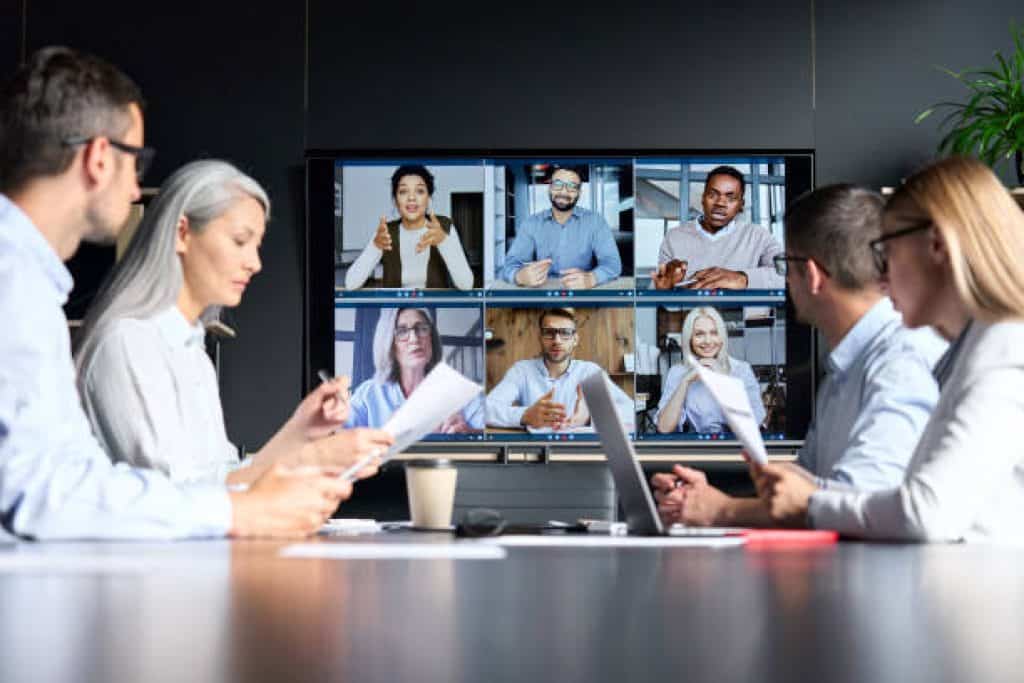
In today’s fast-paced business environment, the importance of audio-visual technology in meeting rooms cannot be overstated. Audio-visual technology is essential for businesses seeking to communicate effectively and efficiently in a meeting setting. Meeting rooms equipped with state-of-the-art audio-visual equipment enable businesses to conduct meetings remotely, share presentations, and collaborate with colleagues in real time.

In the future, the importance of AV technology in meeting rooms will only continue to grow. With advancements in technology, the possibilities for communication and collaboration are endless. Meetings and presentations can be more interactive and engaging than ever before and using augmented and virtual reality will allow for even more immersive experiences. Emerging technology such as AI, AR & VR, interactive displays, voice-activated assistants, and wireless presentation systems are set to revolutionise the industry’s future. By equipping meeting rooms with the right equipment and systems, businesses can ensure that their meetings are efficient, collaborative, and productive.

Furthermore, AV technology can be integrated with artificial intelligence, enabling meeting room systems to learn from user behaviour and preferences, making meetings and presentations more efficient and personalised. By investing in the latest audio-visual technology solutions, businesses can create a professional and engaging environment that enhances communication, collaboration, and productivity.

Current state of audio-visual technology in meeting rooms

Audio-visual technology in meeting rooms has been a game changer in modern business. With advancements in digital technology, modern meeting rooms are equipped with state-of-the-art audio and visual equipment that enables seamless communication and collaboration. Using audio-visual technology in meeting rooms facilitates effective communication and decision-making. Organisations worldwide invest in the latest AV equipment to ensure seamless collaboration, communication, and presentation in their conference rooms.

The adoption of this technology has revolutionised the way people conduct meetings and presentations and collaborate with others. However, like any other technology, some advantages and disadvantages come with it.

Pros:

  1. Better communication: Audio-visual technology provides better communication among meeting participants. With video conferencing and teleconferencing technology, participants can easily communicate with each other, even when they are not physically present in the same location.
  2. Improved collaboration: Audio-visual technology makes it easier for people to collaborate. Participants can easily share ideas and work on projects with wireless presentation and touch panel control systems.
  3. Enhanced presentations: Audio-visual technology can significantly improve the quality of presentations. Projectors, displays, and digital signage solutions can display high-quality graphics and videos, making presentations more engaging and memorable.
  4. Increased productivity: With the right audio-visual equipment, meetings can be conducted more efficiently, saving time and increasing productivity.

Cons:

  1. Technical difficulties: Audio-visual technology can be complex, and technical difficulties can arise during meetings. This can lead to frustration and wasted time.
  2. Cost: Implementing audio-visual technology can be expensive, especially for small businesses or organisations with limited budgets.
  3. Maintenance: Audio-visual equipment requires regular maintenance to ensure it is functioning properly. This can be time-consuming and costly.
  4. Integration issues: Integrating audio-visual equipment with existing systems can be challenging. With proper integration, the technology may work as intended.

Common Audio-Visual Technology Used In Meeting Rooms

Some audio-visual equipment commonly used in modern meeting rooms include displays, sound systems, interactive whiteboards, and video conferencing. These systems allow for the smooth presentation of ideas, sharing of information and video conferencing with remote participants.

  • Display Screens are a popular audio-visual tool used in meeting rooms. They display presentations, videos, and other digital content on a large screen or wall. Display screens can be connected to a laptop or other devices, making sharing information with other attendees easy.
  • Interactive whiteboards are another useful audio-visual technology used in meeting rooms. They allow meeting participants to interact with digital content in real-time using a touch screen or stylus. This technology allows for more engaging presentations and collaborative brainstorming sessions.
  • Video conferencing systems have also become increasingly popular in meeting rooms. They allow remote participants to join meetings, regardless of location. Video conferencing provides clear audio and video, enabling participants to communicate effectively and collaborate seamlessly.
  • Audio systems are another essential audio-visual tool used in meeting rooms. They provide high-quality sound for presentations, video conferencing, and other audio content. Good quality audio ensures that all meeting participants can hear and participate effectively.

Future trends in audio-visual technology in meeting rooms

Audio-visual technology has become an indispensable tool for modern meetings, and its importance is only set to grow. Nowadays, meeting rooms are equipped with the latest audio-visual technology to enhance collaboration, communication and productivity. AV technology in meeting rooms includes solutions for digital signage, teleconferencing, video conferencing, wireless presentation systems, touch panel control systems, and AV integration for meeting rooms. These solutions offer convenience and flexibility, allowing participants to connect and collaborate seamlessly.

One of the major advancements in audio-visual technology in meeting rooms is integrating automation and using unified communication systems. This allows for the easy control and management of various devices and equipment in the meeting room, enabling the user to focus on the task rather than dealing with technical issues. As well as combine audio, video and web conferencing technologies to offer seamless communication solutions for meeting rooms.

Advantages And Disadvantages Of Emerging Technology

Audio-visual technology in meeting rooms has come a long way since its inception and has transformed how businesses conduct meetings and presentations.  This technology enhances collaboration and communication, providing several advantages for organisations.

  • Improved communication: With the ability to connect with team members and clients remotely, businesses can save time and reduce travel costs. Teleconferencing, web conferencing, and video conferencing solutions enable real-time collaboration, making it easier to exchange ideas and information across different locations.
  • Streamline presentations: Another advantage of audio-visual technology in meeting rooms is the ability to streamline presentations. Wireless presentation systems, touch panels, and control systems seamlessly integrate different devices and applications. This integration improves productivity by eliminating the need for manual setup and configuration of equipment.
  • Immersive content display: Digital signage solutions and projectors also effectively display information in meeting rooms. Businesses can showcase products, services, and relevant content to attendees, creating an immersive and engaging experience.
  • High-quality sound and video: The sound and video quality of audio-visual technology in meeting rooms is superior, ensuring that attendees can hear and see presentations. This quality helps to maintain audience attention and engagement, improving overall communication effectiveness.

However it is important to acknowledge the potential downsides of AV technologies as well.

  • Budget: One of the main disadvantages of audio-visual technology in meeting rooms is the cost of equipment and installation. AV equipment, such as displays, sound systems, and digital displays, can be expensive to purchase and maintain. Additionally, the installation process can be complicated and time-consuming, disrupting regular business operations.
  • Technical issues: Even with the most advanced equipment and systems, technical glitches and malfunctions are always risky. This can frustrate meeting attendees and may lead to delays or cancellations.
  • Distraction: Using audio-visual technology in meeting rooms may lead to distractions during presentations. Attendees may become more focused on the technology and less on the presentation’s content, which can hinder the effectiveness of the meeting.
  • Security: There are potential security concerns with audio-visual technology in meeting rooms. Wireless systems and teleconferencing technology can be vulnerable to hacking and cyber attacks, which can compromise sensitive information and data.

Emerging Audio-Visual Technology In Meeting Rooms

As technology continues to advance, so do meeting rooms. Upcoming audio-visual technology in meeting rooms includes

  • AI or artificial intelligence has been rapidly integrated into various industries, including the audio-visual industry. AI provides intelligent automation and control systems in meeting rooms, making meetings more efficient. AR or augmented reality and VR or virtual reality technologies are also emerging in the audio-visual industry, enabling remote attendees to feel like they are in the same room with other participants. This technology is great for remote employees or clients who cannot physically attend a meeting but still need to be involved.
  • Interactive displays have become a standard feature in many modern meeting rooms. These displays are designed to engage participants and increase collaboration. The displays allow participants to share information quickly and efficiently. They can be used to display presentations, brainstorming sessions, and interactive touchscreens for annotation and whiteboarding.
  • Voice-activated assistants have also become popular in meeting rooms. They enable hands-free control over meeting room technology and can be integrated with other technologies like projectors, sound systems, and video conferencing equipment. Wireless presentation systems have also become popular in modern meeting rooms. They enable participants to share content easily from their own devices, eliminating the need for wires and cables.
  • Touch panel control systems enable easy control over meeting room equipment, making it easier for participants to focus on the meeting instead of figuring out how to use the technology. Collaboration is essential in meetings; unified communications and tools can help teams work together effectively. Teleconferencing, web conferencing, and video conferencing solutions allow remote participants to join meetings from anywhere, making meetings more accessible and inclusive. 

To make the most of these upcoming technologies, businesses must ensure that their meeting rooms have the right equipment and systems. The AV equipment for meeting rooms should be selected based on the business’s specific needs. This equipment includes projectors, sound systems, and video conferencing equipment. Digital signage solutions can also be integrated into meeting rooms to display relevant information or provide wayfinding. By equipping meeting rooms with the right equipment and systems, businesses can ensure that their meetings are efficient, collaborative, and productive.

Impacts of audio-visual technology on meeting rooms

Implementing audio-visual technology in meeting rooms can present various challenges, such as:

  1. Compatibility Issues: When implementing audio-visual technology in meeting rooms, one major challenge is the compatibility of equipment and systems. Different equipment, such as projectors, sound systems, and displays, may have varying compatibility requirements, making integrating them into a cohesive system difficult. The solution to this challenge is to ensure that all equipment and systems are compatible before implementing them in the meeting room.
  2. Complexity: Another challenge is the complexity of the technology itself. The equipment and systems used for audio-visual technology in meeting rooms can be sophisticated, requiring skilled professionals to install and maintain them. This can pose a problem for smaller businesses or those with limited resources. One solution is to outsource the installation and maintenance of the equipment to professional audio-visual service providers who specialise in setting up and maintaining such systems.
  3. User adoption: Some employees may need to become more familiar with the technology or resist change. This can result in frustration and difficulty using the equipment, decreasing productivity. One possible solution is to provide training sessions to all employees to ensure they are familiar with the technology and how to use it effectively.
  4. Cost: The equipment and systems used can be expensive, and smaller businesses or those with limited budgets may need more money to invest in such technology. One solution to this challenge is to explore alternative options, such as wireless presentation systems, digital signage solutions, and web conferencing technology, which may be more cost-effective and still provide the necessary functionality.

However, these challenges can be overcome with careful planning, research, and the right solutions, leading to a more efficient and productive meeting experience.

How Audio-Visual Technology Affects Meeting Productivity And Communication?

Audio-visual technology in meeting rooms has transformed how meetings are conducted, increasing productivity and improving communication among team members. With technological advancement, audio-visual equipment has become an essential tool for businesses to communicate and collaborate effectively, making meetings more productive and engaging. Modern meeting room technologies enable teams to collaborate remotely, share information, and make decisions quickly without leaving their desks.

One of the most important aspects of audio-visual technology in meeting rooms is the ability to display high-quality visuals on large screens, enabling teams to present their ideas and thoughts. This technology is particularly useful during presentations, where teams can showcase their work to stakeholders and decision-makers, making getting buy-in and approval for projects easier.

In addition, audio-visual technology in meeting rooms enables teams to collaborate more effectively. With the integration of teleconferencing and web conferencing solutions, team members can connect remotely, making it easier to work together, regardless of their physical location. This technology has become particularly important in the current global climate, where remote working has become the norm.

However, integrating the latest audio-visual equipment allows teams to communicate and collaborate more effectively, improving productivity and decision-making. As businesses adopt new technologies, audio-visual technology in meeting rooms will continue to play a critical role in the success of meetings and the business’s overall success.

Implementing audio-visual technology in meeting rooms

When selecting audio-visual technology for meeting rooms, businesses should keep several key considerations in mind. The right technology can improve communication, collaboration, and productivity during meetings, while the wrong technology can create frustration and hinder progress. Some key factors to consider when selecting audio-visual technology for meeting rooms are.

  1. It’s important to understand the specific needs of your organisation. Consider the types of meetings that typically take place in your meeting rooms and the goals of those meetings. Do you need to accommodate large groups or small teams? Will you be presenting complex data or simply discussing ideas? Understanding your needs will help you select the right equipment and systems to support your meetings.
  2. Regarding equipment, there are a few key pieces to consider. Displays, projectors, and screens are all essential for sharing information and presentations with meeting attendees. Sound systems are also important for ensuring that everyone can hear what’s being said, while digital signage can be useful for displaying information or wayfinding in larger meeting spaces.
  3. Collaboration is another important consideration. Wireless presentation systems, touch panels, and control systems can facilitate meeting collaboration. Integration with other technology solutions, such as unified communications and web conferencing, can further enhance collaboration and productivity.
  4. Of course, budget is always a consideration when selecting technology for meeting rooms. It’s important to balance the features and capabilities of different systems with the budget available to your organisation. In some cases, it may be worth investing more in high-quality equipment that will provide long-term benefits. In contrast, a simpler, more affordable solution may be sufficient in other cases.
  5. When selecting audio-visual technology for meeting rooms, it’s also important to consider ease of use. Systems should be intuitive and user-friendly, allowing meeting attendees to quickly and easily access the needed features without confusion or frustration.
  6. It’s worth considering the future of your organisation and the technology landscape. As technology evolves, selecting solutions that can adapt and grow within your organisation is important. Upgradable systems and solutions with built-in automation can help future-proof your meeting rooms and ensure that your investment will continue to provide value over time.

Thus, selecting the right audio-visual technology for meeting rooms can create an environment that supports communication, collaboration, and productivity.

Tips For Ensuring Audio-Visual Technology Is Effective In Meeting Rooms

  • Firstly, determine the meeting room’s size and layout to select the right AV system. Consider the room’s lighting, seating arrangement, and the distance between the attendees and the display or projection screen. 
  • Ensure the AV equipment is compatible with devices and software, including laptops, smartphones, and tablets, to facilitate smooth presentations.
  • Invest in high-quality AV equipment that is easy to operate and install, with simple and user-friendly interfaces. 
  • Wireless presentation systems are also useful for modern meeting rooms, as they eliminate the need for tangled cables and messy wires.
  • Unified communications and automation can also improve efficiency and productivity during meetings.
  • Seek professional AV integration services to ensure the AV equipment is installed and configured correctly. Regular maintenance and upgrades can also ensure that the AV technology in the meeting rooms remains effective and up-to-date.

Picture of Meeting Store

Meeting Store

Table of Contents

Using AV equipment to facilitate productive meetings
productivity

Outperform: Using AV Equipment to Facilitate Productive Meetings

In today’s fast-paced business world, the key to success lies in conducting efficient and productive meetings. To achieve this, organizations are increasingly turning to Audio-Visual (AV) equipment to revolutionize the way meetings are conducted. AV technology offers a wide range of benefits, from small business gatherings to large conference rooms, and from virtual meetings to hybrid setups. Let’s explore how AV equipment can be your secret weapon in achieving more efficient, engaging, and collaborative meetings.With the right AV setup, meetings can become seamless and productive. AV equipment plays a crucial role in enhancing communication and collaboration among team members. Through interactive presentations, real-time data sharing, and smooth video conferencing, AV technology fosters a more engaging meeting environment. When participants feel connected and involved, meeting productivity soars.One of the most significant advantages of AV equipment is the array of tools it offers for productive meetings. AV devices such as high-definition projectors, video conferencing systems, and audio systems with crystal-clear sound quality elevate the meeting experience. These tools promote effective communication, help maintain focus, and ensure that every attendee can actively participate.Implementing AV techniques can further improve meeting outcomes. Making the best use of visuals, multimedia content, and interactive elements keeps attendees engaged and interested. From well-designed presentations to immersive virtual reality experiences, AV technology adds a new dimension to meetings, making them memorable and impactful.To leverage the full potential of AV equipment, it’s crucial to choose the right tools for your specific meeting needs. For small business meetings, portable and easy-to-use AV solutions are ideal. On the other hand, large conference rooms require more sophisticated AV setups to accommodate a larger audience effectively.Meeting Facilitation Tips – How to Facilitate Your First Meeting  AV Equipment for Small Business MeetingsIn today’s fast-paced business environment, small businesses and startups are increasingly recognizing the importance of holding productive meetings to achieve their goals effectively. One key factor that can significantly enhance meeting efficiency is the proper utilization of AV equipment. Audio-visual technology plays a crucial role in meeting facilitation, communication, collaboration, and productivity. In this section, we will explore budget-friendly AV solutions that can benefit small business meetings and offer tips for setting up an effective AV system in a small meeting room.Maximising Productivity with AV EquipmentAV equipment can be a game-changer when it comes to maximizing productivity during meetings. By incorporating AV technology strategically, small businesses can create an environment that fosters engagement, interaction, and seamless communication. Utilizing AV equipment allows participants to share information visually and audibly, leading to more focused discussions and better decision-making processes.AV Equipment for Small Business Meetings: The Basics Understanding the Importance of AV Technology in Meetings: AV equipment offers the advantage of making meetings more dynamic and engaging. Visual aids, such as presentations and videos, help in conveying complex ideas effectively, leading to better understanding and retention of information. Exploring Budget-Friendly AV Solutions: Small businesses often have limited resources, but that doesn’t mean compromising on AV capabilities. There are affordable AV solutions available, including AV equipment rental services, which provide access to high-quality devices without the need for significant upfront investments. The Advantages of Using AV Devices to Improve Meeting Efficiency: AV technology promotes active participation and collaboration, which can significantly enhance meeting outcomes. By incorporating AV devices, businesses can stimulate creativity and ensure everyone’s ideas are effectively communicated. Tips for an Effective AV Setup in a Small Meeting Room Choosing the Right AV Equipment: Selecting suitable AV gear is crucial for a successful meeting. Consider factors such as the size of the meeting room, the number of participants, and the type of interactions expected to ensure the equipment meets the specific needs of the business. Ensuring Seamless Meeting Collaboration: AV equipment should be easy to use to avoid unnecessary technical hiccups. Collaborative tools, such as interactive displays and wireless screen sharing, allow for smooth teamwork and idea exchange. Enhancing Meeting Communication with AV: Effective communication is the backbone of productive meetings. AV technology provides various means of communication, such as video conferencing and instant messaging, to keep everyone connected and informed. AV Equipment Features Benefits Interactive Displays Touchscreen capability, real-time editing Facilitates interactive discussions Video Conferencing Systems High-quality audio and video Enables seamless remote collaboration Wireless Screen Sharing Easy content sharing from devices Encourages participation and idea exchange Audio Systems Crystal-clear sound quality Ensures clear communication during meetings   Effective Meeting Room AV SetupIn today’s rapidly evolving business landscape, virtual meetings have become an essential aspect of modern communication and collaboration. To ensure productive and engaging virtual meetings, the right audio-visual (AV) equipment and tools play a crucial role. In this section, we will evaluate the best AV software for virtual meetings and explore how AV technology can overcome common challenges in virtual collaboration while enhancing meeting efficiency and communication.AV Equipment for Productive Meetings: Choosing the Right ToolsOne of the key elements in facilitating productive meetings is selecting the appropriate AV equipment. For small business meetings or large conference rooms, the right AV setup can make a significant difference. To enhance virtual team collaboration, businesses should invest in AV technology that supports interactive features and seamless communication.Top-rated AV Tools for Virtual Meetings: Boosting Engagement and InteractionWhen it comes to virtual meetings, engagement is vital to ensure active participation and collaboration among attendees. Utilizing top-rated AV tools can foster engagement by offering features like real-time polls, whiteboard sharing, and virtual breakout rooms for group discussions. These tools help create an immersive meeting environment that maximizes productivity and ensures effective communication.Overcoming Common Challenges in Virtual Collaboration: AV SolutionsVirtual collaboration comes with its own set of challenges, such as technical glitches, poor audio quality, and limited interaction. However, with the right AV equipment and tools, businesses can overcome these obstacles. AV equipment benefits in business meetings include improved communication, reduced meeting downtime, and enhanced meeting productivity.Integrating AV Technology with Virtual Meeting Platforms: Seamless ImplementationTo achieve a seamless meeting experience, integrating AV technology with virtual meeting platforms is essential. By following AV equipment implementation best practices, businesses can ensure that their virtual

Read More »
AV technology insights
Training and Education

Unlocking AV Technology Insights: Stay Ahead of the Curve

In today’s fast-paced digital world, Audiovisual (AV) technology has become an indispensable part of our lives. From enhancing workplace collaboration to revolutionizing remote work solutions, AV technology has made significant strides, and staying updated with its rapid advancements is crucial. In this blog, we’ll delve into the latest AV technology trends for 2023, providing you with valuable insights into the AV industry’s future.The AV industry is experiencing a seismic shift, with audiovisual innovations at the forefront. One of the most notable trends is the evolution of video conferencing solutions. With the rise of remote work, businesses are adopting cutting-edge AV tech to facilitate seamless communication and collaboration. These innovations are not just limited to the corporate world but extend to healthcare technology, education technology, and even live events technology.Immersive audio is another game-changer in AV technology. It creates a captivating auditory experience, making virtual meetings and events feel incredibly lifelike. This trend aligns perfectly with the demand for smart meeting rooms, where AV integration plays a pivotal role. Interactive displays and next-gen AV solutions are transforming traditional meeting spaces into tech-savvy hubs, enhancing workplace collaboration and productivity.The influence of AV technology extends across diverse sectors. In healthcare technology, AV solutions are used for telemedicine and enhancing patient care. In education technology, interactive displays and AV technology development are revolutionizing the way students learn. Even the entertainment industry is embracing immersive AV tech for gaming and entertainment purposes.Sustainability is a key consideration in the AV technology landscape. Sustainable technology options are gaining traction as businesses seek eco-friendly AV equipment and practices. Future-proofing your AV technology stack is also paramount. Keeping an eye on AV technology updates and staying ahead of emerging AV trends will ensure that your investments remain relevant for years to come.Investing in AV technology requires careful planning. Businesses, especially small ones, must choose the right AV equipment and implement AV integration best practices to maximize ROI. This involves aligning AV tech strategies with specific industry needs and goals, whether it’s for virtual meetings, education, or healthcare.Tech Insight – AV-HS600 Live Switcher  The Evolution of AV TechnologyIn the fast-paced world of AV technology, staying ahead of the curve is essential. This section delves into the historical development of AV technology, highlighting key milestones and innovations that have shaped the AV landscape. AV Technology: A Brief OverviewAV technology, short for audio-visual technology, is a dynamic field that combines audio and visual elements to create a seamless user experience. From its inception to the present day, AV technology has undergone remarkable transformations.The Early Days: A Glimpse into AV Technology’s RootsThe roots of AV technology can be traced back to the late 19th century when inventors like Thomas Edison and Émile Reynaud experimented with motion pictures and photographs. These early innovations laid the groundwork for the audiovisual innovations we rely on today.Key Milestones in AV Technology Introduction of Sound in Film (1920s): The integration of sound into motion pictures marked a significant milestone. This breakthrough revolutionized the entertainment industry, giving birth to the talkies. Color Television (the 1950s): The advent of colour television transformed home entertainment, making it more immersive and engaging. Videotape Recorders (the 1950s-60s): The development of VCRs enabled users to record and play back audiovisual content, altering the way we consume media. The Rise of Video Conferencing (1980s): Video conferencing solutions revolutionized business communication, allowing remote collaboration and reducing travel expenses. Immersive Audio (1990s): Innovations in audio technology brought immersive sound experiences to cinemas, gaming, and home entertainment. AV Technology Across IndustriesAV technology has seamlessly integrated into various industries, driving progress and innovation. Education Technology: Interactive displays and cutting-edge AV tech have transformed classrooms, making learning more engaging and effective. Audiovisual solutions enhance students’ understanding and participation, aligning with AV technology trends in education. Healthcare Technology: AV technology has a vital role in healthcare, from telemedicine and surgical simulations to patient education and remote diagnostics. These advancements improve patient care and accessibility to medical expertise. Live Events Technology: The live events industry relies heavily on AV technology for stage setups, lighting, sound, and projection. AV tech has elevated live entertainment experiences, enhancing audience engagement. Smart Home Technology: In smart homes, AV tech blends seamlessly with automation systems, providing homeowners with immersive entertainment and control over their environment. Small Business Technology: AV integration in small businesses streamlines operations, facilitating effective communication, presentations, and customer interactions. AV Technology Trends 2023As we look ahead to 2023, several AV technology trends are shaping the industry: Next-gen AV Solutions: The industry continues to evolve, with cutting-edge AV tech pushing boundaries. Sustainable AV Technology Solutions: Sustainability is a growing concern, leading to eco-friendly AV solutions. AV Technology for Remote Work: Remote work solutions are becoming increasingly critical for modern businesses. AV Integration Best Practices: Ensuring seamless integration is crucial for maximizing AV technology ROI.   Unlocking the Potential of Audiovisual TechIn today’s rapidly evolving digital landscape, Audiovisual (AV) technology has emerged as a driving force, reshaping the way businesses and individuals connect, collaborate, and innovate. This section delves into the concept of unlocking the potential of AV technology, explaining how it can be harnessed for various purposes and providing real-life examples of successful AV technology implementations.Unlocking the Power of AV Technology InsightsAV technology, encompassing audiovisual innovations and cutting-edge AV tech, has become an integral part of our daily lives. From the corporate boardroom to the living room, AV technology has found applications across a diverse spectrum of industries. Let’s explore how businesses and individuals can harness the power of AV tech: Business Applications Video Conferencing Solutions: The AV industry has witnessed a revolution in video conferencing technology. Businesses now rely on immersive audio and high-definition video to conduct virtual meetings, making remote collaboration seamless. This technology has become essential in the era of remote work solutions.Smart Meeting Rooms: AV integration within smart meeting rooms enhances workplace collaboration. Interactive displays, equipped with AV technology advancements, enable dynamic presentations and efficient information sharing. Companies can optimize their AV technology stack to improve productivity and streamline operations.Emerging AV Trends: Staying

Read More »
best remote work tools
Remote Collaboration

Discover the Best Remote Work Tools for Unparalleled Productivity

Remote work has become increasingly popular in today’s workforce, transforming the way businesses operate and employees carry out their tasks. With advancements in technology and the need for flexibility, remote work has gained significant traction, allowing individuals to work from any location and collaborate seamlessly. To ensure optimal productivity and effective collaboration, it is essential to utilize the right tools specifically designed for remote work environments. This blog aims to explore the best remote work tools across various categories, focusing on enhancing productivity and collaboration for remote teams.In recent years, remote work has witnessed a remarkable surge in popularity. This shift in the work landscape has been fueled by various factors, including technological advancements, changing work preferences, and the need for improved work-life balance. Remote work allows individuals to break free from the traditional office setting, offering the flexibility to work from home, co-working spaces, or any location with an internet connection.Remote work brings its own set of challenges, such as maintaining productivity, effective collaboration, and seamless communication. To overcome these challenges and ensure success in a remote work environment, it is crucial to leverage the power of the right tools. The use of appropriate tools can enhance productivity, streamline communication, and foster collaboration among remote teams. By incorporating these tools into daily work routines, remote workers can achieve efficient workflows and maintain high levels of productivity.Remote collaboration is a vital aspect of successful remote work. The right tools enable team members to collaborate effectively, regardless of their physical locations. Whether it’s brainstorming ideas, sharing documents, or conducting virtual meetings, remote collaboration tools play a significant role in bridging the gap and ensuring seamless teamwork.My Top 4 Tools for Working Remote!  Best Remote Work Tools for Small TeamsIn today’s digital age, remote work has become increasingly prevalent, and small teams often face unique challenges in this setup. To ensure seamless collaboration and efficient communication, it is crucial for small teams to utilize the right remote work tools. In this section, we will discuss the specific needs of small teams in a remote work setup and present a curated list of remote work tools that cater to those requirements. These tools offer features and benefits that are suitable for small team collaboration and communication, enabling teams to thrive in a remote work environment.Project Management ToolsSmall teams require robust project management tools to streamline their workflow and enhance productivity. The following tools are highly recommended: Trello: Trello provides a visual and intuitive interface for organizing tasks, assigning responsibilities, and tracking progress. Its user-friendly design makes it ideal for small teams to manage projects effectively. Asana: Asana offers a comprehensive project management platform with features such as task assignment, deadline tracking, and team collaboration. It simplifies the coordination of small teams working remotely. Communication ToolsEffective communication is essential for small teams to maintain cohesion and stay connected. Consider the following communication tools: Slack: Slack is a popular instant messaging platform that enables real-time communication. It allows small teams to create dedicated channels for different projects, fostering seamless collaboration and remote communication. Microsoft Teams: Microsoft Teams combines chat, video meetings, and file sharing capabilities into one platform. It offers a centralized space for small teams to communicate and collaborate effectively. Collaboration ToolsRemote collaboration tools facilitate teamwork and enable small teams to collaborate efficiently on shared tasks. The following tools are highly recommended: Google Workspace: Formerly known as G Suite, Google Workspace provides a suite of productivity tools such as Google Docs, Sheets, and Slides. These tools allow small teams to collaborate in real-time, edit documents simultaneously, and ensure version control. Miro: Miro is a virtual whiteboard platform that enables remote teams to brainstorm, visualize ideas, and collaborate on projects. It offers a range of templates and tools to enhance small team collaboration. Time Management ToolsTo ensure optimal time utilization and productivity, small teams can benefit from time management tools. Consider the following options: RescueTime: RescueTime tracks the time spent on various tasks and provides insights into productivity. It helps small teams identify time-wasting activities and optimize their workflow. Toggl: Toggl is a time tracking tool that allows small teams to monitor their work hours accurately. It provides detailed reports and helps identify areas where time can be better allocated.   Affordable Remote Work ToolsIn the era of remote work, having the right tools at your disposal is crucial for staying productive and connected. However, cost concerns can often hinder the adoption of remote work tools. Fortunately, there are several cost-effective solutions available that deliver functionality and performance without compromising quality. In this section, we will explore a curated selection of affordable remote work tools that provide excellent value for money.Productivity Tools for Efficient Remote WorkWhen it comes to optimizing your remote work experience, productivity tools play a vital role. Here are some budget-friendly options worth considering: Toggl – Toggl offers a time tracking app that helps you monitor and manage your work hours effectively. It allows you to track your time across different projects, generate reports, and improve your productivity by identifying time-wasting activities. Notion – Notion is a versatile workspace tool that combines note-taking, task management, and collaboration features. It enables seamless organization, efficient collaboration, and easy access to information, making it a valuable asset for remote teams. Asana – Asana is a popular project management platform that empowers teams to streamline their workflows and stay on top of tasks. With intuitive task management, milestone tracking, and team communication features, Asana fosters efficient remote collaboration. Collaboration and Communication Tools for Remote TeamsEffective collaboration and communication are essential for remote teams to thrive. Here are some affordable tools that facilitate seamless teamwork: Slack – Slack is a leading communication platform that enables real-time messaging, file sharing, and integrations with various apps. It helps remote teams stay connected, exchange ideas, and collaborate effortlessly, fostering a sense of virtual togetherness. Google Workspace – Google Workspace offers a suite of cloud-based productivity tools, including Google Docs, Sheets, and Drive. These tools allow for real-time document collaboration, file storage,

Read More »
Achieving higher productivity with AV gear
productivity

Soar to Success: Achieving Higher Productivity with AV Gear

In today’s fast-paced work environments, where time management and efficiency are paramount, audio-visual (AV) gear has emerged as a game-changer for maximizing productivity. AV solutions have revolutionized the way businesses operate, enabling seamless collaboration, improved project management, and enhanced productivity across various domains.AV technology plays a crucial role in modern work environments, catering to the diverse needs of different industries. From small businesses and startups to home offices, educators, and content creators, AV gear offers practical solutions to boost productivity across the board.With the rise of remote work, AV gear has become an indispensable asset for remote teams. Virtual meetings, webinars, and conference calls have become routine, and AV solutions facilitate smooth communication, making collaboration across distances seamless. Remote teams can now conduct efficient training sessions and sales pitches, fostering productivity regardless of their physical location.AV gear enables teams to function cohesively, with improved workflow and optimised project management. Team productivity is enhanced through efficient task allocation, real-time updates, and seamless presentations, all made possible by the integration of AV solutions.For creative professionals like video editors and content marketers, AV gear offers a plethora of tools that enhance productivity in content creation. Video editing becomes more efficient, and marketers can create compelling campaigns with AV solutions tailored to their needs.3 Productivity Lessons – Achieve More  AV Gear Productivity for Small Businesses and StartupsIn the fast-paced world of modern communication, the role of audiovisual technology in delivering efficient presentations cannot be overstated. This section delves into the significance of audiovisual technology, explores its relevance in today’s communication landscape, and encourages readers to embrace transformative AV solutions to lead successful presentations. With a focus on providing value and addressing the searcher’s intent, we uncover the true power of smart presentation technology and its impact on maximizing productivity with AV equipment.Maximising Productivity with AV EquipmentThe Power of Audiovisual TechnologyAudiovisual technology has revolutionized the way presentations are delivered and received. Combining both auditory and visual elements, it enables presenters to communicate their messages with greater clarity and impact. Through the seamless integration of presentation equipment such as multimedia solutions, interactive displays, audio systems, and presentation software, the audience’s engagement is enhanced, leading to more effective communication.Transformative AV Solutions for Engaging PresentationsIn today’s digital age, the demand for interactive and immersive presentations is on the rise. Smart presentation technology offers advanced presentation devices that cater to this need. With features like audiovisual integration, interactive presentation solutions, and cutting-edge presentation technology, presenters can create captivating experiences that leave a lasting impression on their audience. Embracing these innovative tools helps presenters deliver content in a way that captivates and educates effectively.The Relevance of Audiovisual Technology in Modern CommunicationEnhancing Visual CommunicationVisual aids play a crucial role in conveying complex information concisely. Audiovisual technology facilitates the seamless integration of visual communication systems, enabling presenters to create engaging visuals that aid in understanding and retention. This not only enhances the audience’s learning experience but also ensures that the key points are well-received and remembered.Efficient Presentations with AV TechnologyEfficiency is the hallmark of successful presentations. Digital projectors, conference room solutions, and presentation accessories equipped with the latest AV technology streamline the presentation process, making it smoother and more professional. Presenters can focus on delivering their content without technical interruptions, enhancing their credibility and the overall impact of their message.Embracing Audiovisual InnovationStaying Ahead with AV Technology TrendsTo remain at the forefront of presentation excellence, staying up-to-date with the latest AV technology trends is crucial. From wireless presentation solutions to AI-driven presentation automation, the industry is constantly evolving. By adopting next-gen presentation solutions and incorporating the latest features, presenters can differentiate themselves and deliver presentations that stand out.  AV Gear Productivity for Home Offices and Remote WorkThe world of remote work has seen a significant transformation in recent times. With the increasing demand for flexible work environments, the importance of AV gear productivity for home offices and remote teams has never been higher. In this section, we will explore how AV gear can revolutionize home offices, enhance productivity, and facilitate seamless collaboration. We will also provide valuable tips for selecting the right AV equipment to maximize productivity.Maximising Productivity with AV EquipmentAV gear plays a pivotal role in optimizing productivity for individuals, small businesses, startups, educators, creative professionals, and more. Leveraging AV technology in remote work settings allows teams to achieve their best potential, making tasks more efficient and time-effective. The integration of AV gear enables better project management, collaboration, and remote team productivity, fostering a conducive work environment.Transforming Home Offices into Efficient WorkspacesProductivity with Audio-Visual GearHome offices can witness a remarkable transformation with AV gear. By incorporating AV solutions like high-quality webcams, noise-cancelling microphones, and professional lighting, remote workers can create a professional environment conducive to productivity. AV gear ensures seamless video conferencing and virtual meetings, eliminating disruptions and fostering clear communication.AV Gear Productivity TechniquesImplementing AV gear productivity techniques such as using dual monitors, wireless screen sharing, and ergonomic setups can significantly enhance work efficiency. These strategies help in multitasking, organizing workflow, and staying focused, resulting in improved overall productivity.AV Gear for Remote Work ProductivityAV gear specifically designed for remote work ensures a seamless virtual work experience. From specialized headsets for clear audio during conference calls to innovative whiteboard solutions for collaborative brainstorming sessions, AV equipment caters to the unique needs of remote teams, enabling them to achieve higher productivity.Benefits of Using AV Solutions for Remote Teams and Virtual CollaborationAV Gear for Meeting ProductivityAV gear elevates meeting efficiency by offering easy-to-use and reliable video conferencing solutions. With crystal-clear audio and video, remote teams can conduct virtual meetings just as efficiently as in-person ones, fostering collaboration and driving productivity.AV Gear for Virtual Meetings and WebinarsIncorporating AV technology for virtual events, webinars, and training sessions allows businesses to reach a wider audience, irrespective of geographical constraints. Engaging AV presentations captivate participants, increasing knowledge retention, and positively impacting overall productivity.AV Gear for Collaboration ProductivityAV gear promotes seamless collaboration among remote teams. Tools like virtual whiteboards and shared screens facilitate real-time ideation and problem-solving, leading to innovative solutions

Read More »
Conference room audio systems
Future Trends

The Importance of High-Quality Audio Systems in Conference Rooms

Ensure high-quality audio experiences in your conference room with the latest audio systems and technology. Improve sound quality and communication during conference calls with expert audio solutions and equipment. Discover how to optimize your conference room audio setup for a seamless and productive meeting experience.”

Read More »
MeetingStore.co.uk
Logo
Compare items
  • Total (0)
Compare
0
Shopping cart