Excellent
Next day delivery! Depending on Availability*
Here to help! Monday to Friday, 8:30AM-5:30PM*

5 Conference Room Technology Trends Shaping the Future

Conference room technology trends

In modern workplaces, conference rooms are crucial for communication, collaboration, and productivity. As technology advances, conference room technology trends have evolved to support the needs of modern businesses. Conference room technology has come far from traditional phone and projector setups. Today, audiovisual technology is an essential component of modern conference rooms. 

By adopting five conference room technology trends-

  • video conferencing
  • voice recognition technology 
  • wireless presentation
  • virtual and augmented reality
  • artificial intelligence (AI)

businesses can improve communication, collaboration, and productivity in the modern workplace. 

Conference room technology trends are evolving rapidly, driven by the shift towards remote work and digital transformation. The latest conference room tech updates, such as meeting room design and communication technology, have also received increased attention, with businesses looking to optimise their technology for virtual meetings and smart office environments. Keeping up with the latest conference room technology trends is essential for businesses to stay competitive and improve communication.

Trend #1: Video conferencing

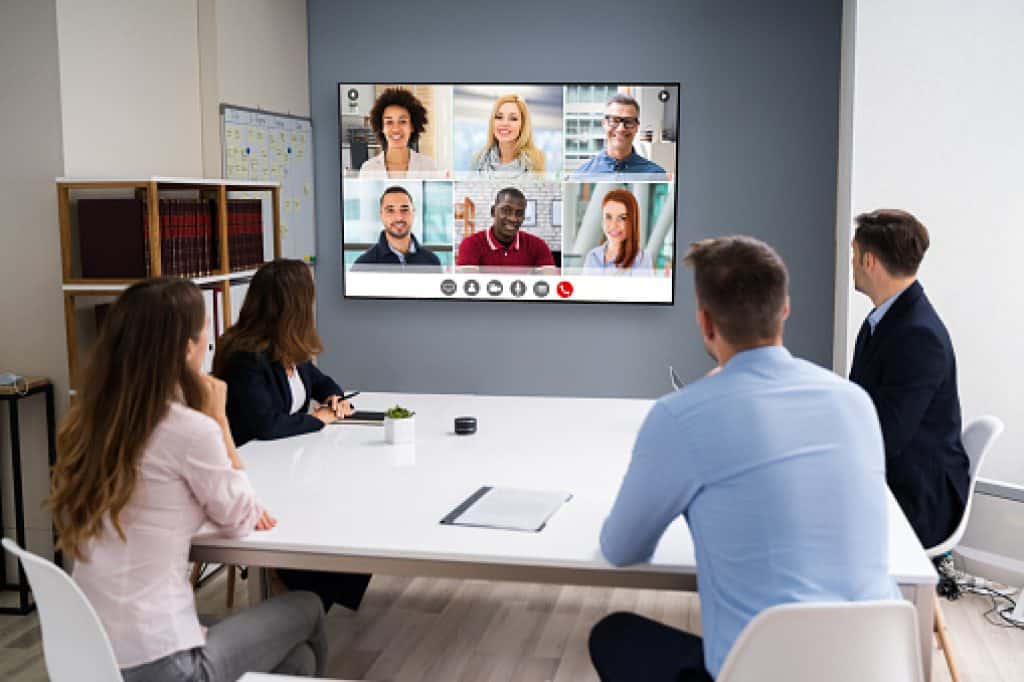
Video conferencing software like Zoom and Microsoft Teams have become ubiquitous in today’s workplace. These platforms provide high-quality audio and video capabilities for virtual meetings, making it easier for teams to collaborate and communicate. This technology is one of the most significant conference room technology trends of the digital age, enabling businesses to collaborate remotely and work together more efficiently. 

Some advanced features of video conferencing software include screen sharing, virtual backgrounds, and recording capabilities. 

  • Screen sharing enables participants to share their screen with others, making presenting information, showing slides, or reviewing documents easier.
  • Virtual backgrounds enable participants to customise their backgrounds, making the meeting more fun and engaging.
  • Recording capabilities allow participants to record the meeting, which can be useful for people who cannot attend the meeting or for future reference.

Video Conferencing Trends

AI-powered cameras and virtual backgrounds are two of the latest conference room technology trends revolutionising how businesses conduct virtual meetings. AI-powered cameras use advanced algorithms to track and zoom in on speakers, making it easier to follow the conversation and stay engaged during virtual meetings. Virtual backgrounds, on the other hand, allow users to change their backgrounds to a virtual setting, giving the impression of a professional workspace, even when working from home.

Other notable conference room technology trends include huddle and meeting room technology. Huddle room technology is designed for small group collaboration and enables teams to work more flexibly and agilely. On the other hand, meeting room technology is designed for larger groups and can include features such as interactive whiteboards, digital signage, and video walls.

Examples Of How Companies Use Video Conferencing To Improve Collaboration

Many companies have adopted video conferencing technology to improve collaboration and streamline workflows. For example, software company uses video conferencing to bring their global team together and collaborate in real-time. Similarly, healthcare companies use video conferencing to enable doctors and healthcare professionals to collaborate on patient care, regardless of location.

Other examples that use video conferencing include consulting firms that use video conferencing to enable their team to work remotely and collaborate with clients worldwide. Video conferencing provides remote training and support to employees and customers, ensuring they stay updated with the latest technology trends.

Trend #2: Voice recognition

One of the most exciting developments in recent years in conference room technology is the rise of voice recognition technology. This technology is transforming how we interact with conference room technology, making it more intuitive, user-friendly, and efficient. The integration of voice recognition technology takes it to the next level. Using voice commands, users can quickly and easily control their presentation, meeting technology, and communication tools, improving productivity and efficiency.

The use of voice recognition technology also plays an essential role in meeting room design and communication technology. By eliminating the need for physical buttons and switches, it streamlines the design of conference rooms and improves the user experience. Adopting voice recognition technology is a critical aspect of digital transformation and smart office solutions. It enables cloud collaboration and wireless presentation systems, increasing productivity and seamless communication.

Voice Recognition Trends

As we look towards the future, exciting advancements in conference room technology are on the horizon. Futuristic conference room technology will include AI-powered virtual assistants, holographic displays, and gesture-controlled interfaces. These upcoming conference room technologies will transform how we conduct meetings and collaborate with others.

  • AI-powered virtual assistants are designed to provide users with a personalised and intuitive experience where they can interact with technology using natural language. These virtual assistants use machine learning algorithms to understand user behaviour and preferences, enabling them to provide personalised recommendations and support.
  • Holographic displays are another innovative technology set to transform conference room technology. These displays use light projection to create 3D holographic images that can be viewed from different angles. This technology allows users to visualise information in a new and immersive way, enhancing the effectiveness of presentations and collaborative sessions.
  • Gesture-controlled interfaces are yet another exciting technology set to change how we interact with conference room technology. These interfaces use sensors to track hand and body movements, allowing users to control technology through gestures and movements. This technology provides a more natural and intuitive way to interact with technology, making it easier and more efficient to conduct meetings and collaborate with others.

These advanced technologies can potentially transform the conference room experience completely. With AI-powered virtual assistants providing personalised support, holographic displays delivering immersive visual experiences, and gesture-controlled interfaces providing intuitive and natural interaction, the conference room of the future promises to be a more productive, engaging, and innovative space.

Examples Of Companies Using Voice Recognition To Streamline Meetings

Several companies have adopted voice recognition technology to streamline meetings. For instance, Cisco Webex Assistant is an AI-powered voice assistant that can help participants join meetings, take notes, and provide follow-up action items. Similarly, Zoom’s virtual assistant, Zoom Assistant, allows users to launch meetings, record and transcribe meetings, and create and manage meeting invites.

Trend #3: Wireless connectivity

Wireless presentation tools are an excellent way to boost productivity and meeting collaboration. It makes it easy for multiple participants to share content and collaborate on projects. This can lead to more creative and innovative solutions and better decision-making. It is essential to have easy-to-use and reliable conferencing solutions, ensuring business communication runs smoothly. Many companies are adopting wireless presentation systems, allowing presenters to share their screens without cables or cords. This reduces clutter in the conference room and makes it easier for participants to share their screens and collaborate on projects. Examples of wireless presentation systems include Barco ClickShare and Airtame.

Wireless Connectivity Trends

As we move towards the future, staying up-to-date with the latest conference room tech updates and embracing the latest futuristic conference room technology to stay ahead of the curve is crucial. As part of the latest conference room technology trends, wireless charging and Bluetooth-enabled devices have become increasingly important in improving productivity and collaboration.

  • Wireless charging technology allows devices to be charged without cables, making it more convenient for users to charge their smartphones and laptops during meetings. With the latest wireless charging technology, users can charge their devices at a distance, making it easier to stay connected without worrying about cables and power sockets.
  • Bluetooth-enabled devices, on the other hand, allow users to connect to various devices wirelessly, enabling easy communication and collaboration. With the latest Bluetooth-enabled devices, users can easily share information and presentations, making meetings and virtual conferences more productive and efficient.

Trend #4: Virtual and augmented reality

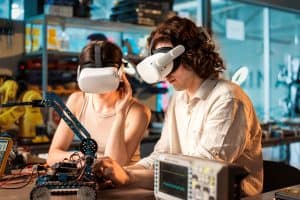
Conference room technology trends constantly advance, and virtual and augmented reality significantly transform meeting rooms into advanced collaborative spaces. Businesses invest in cutting-edge audio-visual technology and collaborative tools to enhance virtual meetings and productivity. Integrating AR & VR creates new possibilities for conference room design, enabling users to experience immersive digital environments that can transform how meetings are conducted.

Virtual and augmented reality can provide a futuristic conference room technology experience by offering the ability to conduct meetings in virtual environments with realistic audio and visual representation. These technologies can improve remote work by simulating face-to-face communication with colleagues, allowing users to interact with each other in a more natural and intuitive way. This approach can facilitate collaboration among team members who are geographically dispersed and improve the communication experience for all attendees.

Moreover, virtual and augmented reality can enhance presentation tools by enabling users to showcase their products and services in an interactive and engaging way. This can be particularly useful for architecture, engineering, and construction businesses, where virtual environments can create 3D models and simulate real-world scenarios. This technology can also help businesses with digital transformation and workplace technology adoption, leading to more efficient and productive meetings.

Latest AR & VR Trends

Upcoming conference room technology will likely include more immersive experiences and advanced productivity tools. Businesses that want to stay ahead of the curve must keep an eye on the latest conference room technology trends and be ready to embrace them. Futuristic conference room technology includes VR headsets and AR overlays that can create an immersive experience for users. These technologies enable users to collaborate in real time and provide a more engaging experience for remote teams. 

  • VR headsets are devices worn on the head that use virtual reality technology to create immersive, three-dimensional environments. They typically consist of a headset that covers the eyes and displays images on small screens in front of each eye. The images are rendered in 3D, and the headset tracks the user’s head movements, allowing the user to look around and interact with the virtual environment. Several types of VR headsets are available on the market, ranging from high-end models that require a powerful PC or standalone models with built-in hardware that don’t require an external device.
  • AR overlays use augmented reality technology to overlay digital information onto the real world. AR overlays can be viewed through a smartphone or tablet camera or a dedicated AR headset. AR overlays use sensors and cameras to detect the user’s surroundings and then project digital images onto the real world in real-time. This can create interactive experiences that combine digital and physical elements, such as training tools, advertising campaigns, etc.

Overall, both VR headsets and AR overlays are exciting technologies that have the potential to revolutionise the way we interact with digital content and the world around us.

Trend #5: Artificial intelligence (AI)

Artificial intelligence (AI) is the simulation of human intelligence in machines programmed to learn, reason, and solve problems. Businesses worldwide have started to adopt AI in various ways to improve operations, enhance productivity, and increase profitability. Conference room technology trends have also seen the introduction of AI-driven tools and solutions that have transformed traditional meeting spaces into high-tech collaborative zones.

Implementing AI-powered audio-visual technology has facilitated remote work and eliminated the need for physical meetings. The latest conference room technology solutions now incorporate presentation, communication, and productivity tools to provide a modern workplace environment that boosts productivity and efficiency. Cloud collaboration is one of the aspects that has been transformed with AI, facilitating wireless presentation and conferencing solutions. The conference room design and meeting room equipment are now planned with the latest conference room tech updates in mind, allowing businesses to implement futuristic conference room technology.

As we look forward to 2023, conference room technology trends are expected to advance even further. AI-powered solutions will continue to shape how we conduct meetings, enhancing the communication experience and creating a more productive work environment. To take advantage of the latest conference room technology, businesses must be open to adopting new ways of conducting meetings and implementing technology that supports remote work and virtual meetings.

The Current State Of AI Technology In Conference Rooms

Conference room technology trends constantly evolve, and AI technology is at the forefront. Technology facilitates communication and collaboration in conference rooms as businesses adapt to the changing workplace landscape. One of the most significant trends in conference room technology is integrating AI-based audio-visual technology. Collaborative tools for remote teams are now a requirement for modern workplaces, with virtual meetings being the norm.

In future, it is clear that AI technology will continue to be a driving force behind these innovations. The latest conference room technology will be even more user-friendly and intuitive, and futuristic conference room technology will be even more integrated into the office fabric. AI-powered communication tools will become increasingly important as businesses look to optimise communication and collaboration. Productivity tools that utilise AI technology will become more common, making it easier for businesses to optimise their workflow and maximise efficiency. 

Examples Of AI technology That Is Changing The Game.

With the onset of digital transformation, workplace technology has been revolutionised, and collaborative tools have taken centre stage. Some examples of AI technology are changing the game in conference room technology trends:

  • One of the most significant changes in conference room technology is the advent of video conferencing. With the help of AI, video conferencing solutions have improved to a great extent. Companies such as Zoom and Cisco have integrated AI algorithms into their platforms to provide users with automatic noise cancellation, virtual backgrounds, and live transcription features.  
  • Another area where AI is making a significant impact is the design of meeting rooms. Modern conference room technology involves much more than just audiovisual technology. It’s about creating an environment that fosters collaboration and boosts productivity. AI is being used to optimise meeting room design and improve communication technology. For instance, huddle room technology involves using AI-powered devices to create small meeting spaces that facilitate collaboration and communication among team members.
  • Cloud collaboration tools have become ubiquitous in modern workplaces. With the help of AI, these tools can analyse data and provide insights that help teams work more efficiently. For example, wireless presentation systems are being integrated with AI algorithms to create smart office environments where meetings can be conducted seamlessly.

Conclusion

In today’s digital transformation, workplace technology is key, and presentation tools and meeting technology are no exception. Cloud collaboration, huddle room technology, and wireless presentation systems are all productivity tools that can make a big difference. Don’t fall behind on the latest conference room technology trends – upgrade your meeting room technology and communication tools today!

Keeping up with the latest meeting room design and communication technology can have a significant impact on productivity and efficiency. By embracing the latest conference room technology, businesses can stay competitive and ensure they are providing a modern workplace for their employees. Investing in the right audio visual technology, video conferencing capabilities, and collaborative tools can improve productivity and enable remote work and virtual meetings.

Picture of Meeting Store

Meeting Store

Table of Contents

remote collaboration for architects
Remote Collaboration

Elevate Architectural Collaboration: Embrace the Power of Remote Collaboration for Architects with Advanced Tools and Techniques

Remote collaboration for architects refers to the process of engaging in architectural collaboration activities and communication through virtual platforms and tools, allowing architects and their teams to work together efficiently, regardless of their physical locations. This modern approach to collaboration enables seamless interaction, data sharing, and coordination, ultimately enhancing productivity and streamlining architectural projects.Remote collaboration eliminates the limitations of geographical boundaries, enabling architects to work on projects with colleagues or clients located anywhere in the world. This allows for a more diverse and talented pool of professionals to collaborate, leading to enhanced project efficiency and outcomes.Virtual collaboration tools and platforms provide real-time communication channels such as video conferencing, instant messaging, and project management software. These tools facilitate effective communication between team members, stakeholders, and clients, fostering better understanding, quick decision-making, and smoother workflow.By eliminating the need for physical meetings and travel, remote collaboration significantly reduces expenses associated with transportation, accommodation, and other logistical aspects. Moreover, it saves valuable time by enabling architects to focus on project tasks rather than being consumed by commuting or scheduling conflicts.Remote collaboration allows architects to work at their own pace and in an environment that suits them best, resulting in improved work-life balance. This flexibility boosts creativity and productivity while accommodating diverse work preferences and individual needs.Work from Anywhere: Tools, Tips, + Methods I Use to Run a Remote Architecture Studio  Remote Collaboration Tools for ArchitectsArchitects today are embracing remote collaboration tools to enhance their workflow and streamline architectural projects. Remote collaboration tools refer to software, platforms, and techniques that enable architects to collaborate effectively with their teams and clients regardless of their physical location. These tools have gained significance in architectural projects due to the increasing prevalence of remote work and the need for seamless communication and coordination.Best Remote Collaboration Software for ArchitectsWhen it comes to remote collaboration for architects, several software options stand out for their features and advantages. These tools facilitate efficient communication, file sharing, and real-time collaboration, enhancing productivity and reducing project timelines. Here are some of the best remote collaboration software options available for architects: Autodesk BIM 360: This comprehensive platform offers collaboration features specifically designed for architectural projects. It enables architects to manage designs, documents, and project data in a centralised environment accessible to all team members. Bluebeam Revu: With its powerful markup and collaboration capabilities, Bluebeam Revu allows architects to review, annotate, and share project documents effortlessly. It promotes effective collaboration among team members, eliminating the need for physical meetings. Figma: Figma is a cloud-based design and prototyping tool that supports collaborative work on architectural designs. It enables architects to create, edit, and share design files in real time, fostering seamless collaboration with team members and clients. Software Features Advantages Autodesk BIM 360 Centralized project management Streamlined coordination and document control Bluebeam Revu Markup and review tools Efficient document collaboration Figma Real-time design collaboration Seamless integration with design workflows Evaluation of Virtual Collaboration Tools for Architectural Design and Project ManagementArchitectural design and project management require effective virtual collaboration tools that support remote teamwork and enhance efficiency. The following virtual collaboration tools are suitable for architectural design and project management: Asana: Asana is a project management platform that allows architects to create tasks, set deadlines, and track progress. It facilitates collaboration by providing a central hub for project-related discussions, file sharing, and updates. Microsoft Teams: Microsoft Teams is a comprehensive collaboration platform that integrates chat, video meetings, and file sharing. It offers architects a seamless environment for virtual communication, team collaboration, and project coordination. Trello: Trello is a visual project management tool that enables architects to organise and track tasks using customisable boards. It promotes collaboration by providing a clear overview of project progress and facilitating communication among team members.   Efficient Architectural Collaboration TechniquesIn today’s fast-paced world, remote collaboration for architects has become an essential aspect of efficient architectural practices. With advancements in technology, architects can now seamlessly collaborate with team members and clients regardless of their physical location. This section explores effective techniques for remote architectural collaboration, the role of virtual design collaboration software in streamlining communication and workflow, online architectural collaboration tools that enhance productivity and collaboration, and showcases successful architectural collaboration projects and the techniques utilised.Remote Collaboration for Architects: Enhancing Efficiency and FlexibilityArchitectural collaboration techniques have evolved significantly with the introduction of remote collaboration. This approach allows architects to work together efficiently and flexibly, regardless of their geographical constraints. Remote collaboration enables architects to overcome the limitations of traditional in-person meetings and facilitates seamless communication and coordination among team members.Virtual Design Collaboration Software: Streamlining Communication and WorkflowVirtual design collaboration software plays a pivotal role in remote architectural collaboration. This software empowers architects to collaborate in real-time, share design ideas, and make simultaneous modifications to architectural plans. By leveraging virtual collaboration platforms, architects can streamline communication, enhance workflow efficiency, and ensure that project timelines are met with precision.Online Architectural Collaboration Tools: Enhancing Productivity and CollaborationA wide array of online architectural collaboration tools is available to architects, offering diverse functionalities to enhance productivity and collaboration. These tools enable architects to share files, collaborate on design concepts, track project progress, and communicate seamlessly. Remote collaboration tools for architects foster a collaborative environment that encourages knowledge sharing, problem-solving, and efficient decision-making.The Future of Remote Architectural CollaborationAs technology continues to advance, remote collaboration for architects will only grow in significance. Architectural firms will increasingly rely on collaborative software, virtual collaboration platforms, and remote collaboration solutions to overcome geographical barriers and optimise their efficiency. Remote collaboration holds immense potential in transforming the architectural landscape, enabling architects to work as cohesive teams, regardless of their physical locations.  Remote Collaboration for Architectural TeamsArchitectural collaboration has undergone a significant transformation with the rise of remote work. As architectural teams increasingly embrace remote collaboration, it becomes crucial to understand its importance, effective strategies, and the tools and techniques that facilitate seamless teamwork. In this section, we explore the significance of remote collaboration for architects, discuss strategies for effective collaboration within architectural teams, provide tips for remote project

Read More »
Boosting presentation productivity with audio visual tools
productivity

Ignite a Revolution: Boosting Presentation Productivity with Audio Visual Tools

In today’s fast-paced digital age, the importance of impactful presentations cannot be underestimated. Across various domains, from business and education to entertainment and public speaking, effective presentations play a pivotal role in conveying ideas, inspiring action, and engaging audiences. With the rapid evolution of technology, audio visual tools have emerged as indispensable assets for enhancing presentation productivity. This article delves into the significance of optimizing presentations for maximum impact, leveraging audio-visual tools, and provides actionable insights to empower presenters in delivering compelling content.As the realm of presentations evolves, audio-visual technology has become a driving force behind creating multimedia-rich, engaging content. Multimedia solutions have revolutionized the way information is communicated, elevating visual communication to new heights. The integration of visual aids, interactive slides, and captivating graphics captivates audiences, making presentations more immersive and memorable.Maximizing productivity with AV equipment is no longer a luxury, but a necessity for effective communication. Incorporating audio visual technology into presentations enhances the overall presentation experience, making it easier for presenters to convey complex ideas and engage audiences effectively. From presentation software tools that enable seamless content creation to innovative audio visual equipment that brings concepts to life, leveraging these resources optimizes presentation effectiveness.Boardroom and Conference Room Design Solutions by Actis Technologies  The Power of Visual CommunicationVisual communication stands as a cornerstone of effective presentations, harnessing the potency of engaging visuals to convey complex ideas with unparalleled impact. In a fast-paced world, where attention spans are fleeting, multimedia solutions, especially visual aids, emerge as indispensable tools for optimizing engagement, retention, and understanding. Let’s delve into how visual communication transforms presentations and boosts productivity, fulfilling the searcher’s intent for valuable insights on this subject.Enhancing Engagement Through Visual AidsVisual communication’s allure lies in its ability to captivate audiences and succinctly deliver intricate concepts. It leverages a blend of presentation skills, audio-visual technology, and visual storytelling to create a memorable experience.   Importance of Visual AidsThe integration of visual aids isn’t mere conjecture; it’s backed by data and research. A study by Dr James McQuivey postulates that a minute of video content is worth 1.8 million words, highlighting the efficiency of visual communication. Effective presentation techniques, when coupled with multimedia solutions, lead to a staggering 97% increase in message recall. This synergy stems from audio visual technology, public speaking tools, and presentation software, all harnessed to optimize communication.To further emphasize, a comparison of presentations with and without visual aids reveals an astonishing 65% increase in information retention when visual aids are present. Incorporating practical multimedia solutions like interactive slides not only encourages participation but also solidifies understanding through experiential learning.Visual Aids for Impactful CommunicationThe concept of visual aids resonates with broader multimedia presentation strategies. Efficient presentations become conduits for impactful communication when underpinned by visual storytelling. This dynamic approach intertwines with engagement techniques, presentation design, and audio-visual integration. Presenters adept in utilizing these visual presentation tools bolster their efficacy in conveying intricate ideas to diverse audiences.Multimedia Solutions and Future TrendsLooking ahead, audio visual solutions are set to redefine presentation effectiveness. Emerging trends showcase the rise of innovative audio visual equipment, catering to speakers seeking to augment their narratives with immersive experiences. The realm of public speaking tools is evolving, advocating for a seamless blend of content and technology. Practical multimedia solutions for speeches will encompass these advancements, enriching the impact of presentations in the years to come.Incorporating Visual Aids: Best PracticesIncorporating visual aids mandates adherence to best practices. To maximize presentation impact, prioritize concise content coupled with engaging visuals. Employ top tools for interactive presentations, creating a synergy between presentation software tools and visual aids. By enhancing PowerPoint presentations with multimedia elements, speakers can craft compelling narratives that resonate and endure.  Best Audio Visual Tools for PresentationsIn the dynamic landscape of modern presentations, the integration of audio visual tools has revolutionized the way information is delivered. Leveraging these tools not only enhances engagement but also enables presenters to convey their message with precision and impact. This section explores a selection of top-notch audio visual tools, their features, real-world benefits, and how they elevate presentation quality.Multimedia Presentation Software: Amplifying Visual CommunicationMultimedia presentation software stands as the cornerstone of effective communication. Tools like Microsoft PowerPoint, Google Slides, and Keynote offer a seamless platform for crafting visually compelling narratives. With a wide array of templates and customizable features, presenters can effortlessly create engaging visuals that resonate with their audience. For instance, medical professionals have used PowerPoint’s interactive slides to simplify complex concepts during medical seminars, resulting in better understanding and engagement.Interactive Slides: Pioneering Engagement TechniquesInteractive slides transcend the conventional linear approach to presentations. Platforms like Prezi and Visme allow presenters to create dynamic, non-linear narratives. This technique caters to diverse learning styles, keeping the audience engaged from start to finish. A marketing conference utilized Prezi’s zooming capabilities to explore intricate campaign details, capturing attendees’ attention and maximizing presentation impact.Audio Visual Integration Solutions: Unifying Impactful CommunicationAudio visual integration solutions amalgamate various elements, including projectors, sound systems, and interactive displays, for a seamless presentation experience. These solutions transform any setting into an immersive environment. Companies like Cisco and Crestron provide cutting-edge integration tools that enable presenters to seamlessly switch between content sources. A technology summit harnessed Cisco’s audio visual equipment to effortlessly transition from live demos to keynote presentations, enhancing overall flow.Visual Storytelling: Acing Presentation DesignVisual storytelling is a powerful technique that combines imagery and narrative to evoke emotions and convey information effectively. Tools like Canva and Adobe Spark empower presenters to craft visually appealing stories that resonate. A nonprofit utilized Canva to create impactful visuals showcasing their humanitarian efforts, emotionally connecting with the audience and underlining their cause’s importance.Maximizing Productivity with AV Equipment: Creating Impactful PresentationsMaximizing productivity with AV equipment entails leveraging tools that streamline presentation creation. A prime example is Haiku Deck, which automates design elements, enabling presenters to focus on content. This tool has been instrumental in academia, where educators have saved time designing lecture slides and instead concentrated on delivering impactful content.  Elevating Presentation Skills through MultimediaIn the modern era of communication, the convergence of

Read More »
remote collaboration tools for students
Remote Collaboration

Essential Remote Collaboration Tools for Students: Enhancing Learning and Collaboration

In today’s rapidly evolving world, remote learning has emerged as a crucial component of education. Enabled by advancements in technology, remote learning provides students with the flexibility to access educational resources and engage in academic pursuits from any location. This article explores the concept of remote learning, highlights the significance of collaboration in student learning, and presents a wide range of remote collaboration tools that enhance student collaboration.Remote learning, also known as distance learning or e-learning, refers to the delivery of education through digital platforms, eliminating the need for physical classroom attendance. This approach has gained momentum due to its numerous benefits, such as flexible scheduling, personalized learning experiences, and expanded access to educational resources.Collaboration plays a pivotal role in fostering effective student learning. When students work together in groups, they actively engage in discussions, share ideas, and contribute their unique perspectives. This collaborative environment enhances critical thinking, problem-solving skills, and promotes creativity. Furthermore, collaboration prepares students for real-world scenarios, where teamwork and cooperation are highly valued.Remote collaboration tools empower students to interact and collaborate seamlessly, despite physical distances. These tools provide a virtual space for students to connect, communicate, and work together on various educational projects.What is an ONLINE COLLABORATION TOOL?  Best Remote Collaboration Tools for StudentsEffective remote collaboration tools are essential for students engaged in remote learning. These tools enable students to work together, share ideas, and collaborate on projects seamlessly, regardless of their physical location. In this section, we will explore the top-rated remote collaboration tools for students, highlighting their features and suitability for remote learning. Google Workspace for Education Google Workspace for Education offers a comprehensive suite of tools that facilitate remote collaboration among students. With its cloud-based platform, students can access and collaborate on documents, spreadsheets, and presentations in real-time. The suite includes Google Docs, Google Sheets, Google Slides, and Google Drive, allowing students to edit and share files effortlessly. Furthermore, Google Classroom provides a centralized hub for assignments, discussions, and teacher-student communication. Microsoft 365 Education Microsoft 365 Education is another popular suite of tools for remote collaboration among students. With applications like Microsoft Word, Excel, PowerPoint, and OneDrive, students can collaborate on documents, create presentations, and store files securely in the cloud. Microsoft Teams, an integral part of Microsoft 365, offers features such as video conferencing, chat, and file sharing, facilitating seamless collaboration and communication. Slack Slack is a versatile communication and collaboration platform that is widely used in educational settings. It allows students to create channels for different subjects or projects, enabling focused discussions and file sharing. With features like direct messaging and integrations with other tools, Slack promotes efficient teamwork and facilitates quick information exchange. Trello Trello is a flexible project management tool that can be utilized by students for collaborative work. It uses boards, lists, and cards to organize tasks and track progress. Students can create boards for group projects, assign tasks, set due dates, and leave comments, fostering effective teamwork and accountability. Zoom Zoom has become an essential tool for remote communication and collaboration. Its video conferencing features enable students to participate in virtual classrooms, engage in group discussions, and conduct presentations. Zoom also offers screen sharing capabilities, breakout rooms for small group work, and chat functionality, enhancing the overall remote learning experience. Padlet Padlet is an interactive online whiteboard that facilitates collaborative brainstorming, note-taking, and content sharing. Students can create virtual bulletin boards and add text, images, videos, and other multimedia elements. Padlet encourages creativity, collaboration, and engagement within virtual classrooms or study groups. Miro Miro is a collaborative online platform that replicates a physical whiteboard environment. It allows students to collaborate on projects, create mind maps, and visualize ideas using sticky notes, drawings, and diagrams. Miro fosters creativity, critical thinking, and active participation in remote learning settings.  Affordable and Free Remote Collaboration PlatformsIn today’s remote learning environment, collaboration among students is crucial for effective education. However, budget constraints can pose challenges when it comes to accessing remote collaboration tools. Fortunately, there are numerous affordable and free options available that cater to the needs of budget-conscious students and educational institutions. This section highlights a selection of cost-effective remote collaboration platforms, including free options, to facilitate seamless student collaboration and enhance the virtual learning experience.Remote Collaboration Tools for Students: Addressing the Financial AspectWhen considering remote collaboration tools for students, affordability is a key factor. Educational institutions and students alike need solutions that are not only effective but also fit within their limited budgets. Fortunately, there are a variety of affordable and free options available that can meet these needs.Affordable and Free Remote Collaboration Platforms Virtual Collaboration Platforms: Online Collaboration Tools: These tools enable real-time collaboration, allowing students to work together on projects and assignments regardless of their physical location. Digital Collaboration Tools: With features like document sharing, video conferencing, and interactive whiteboards, digital collaboration tools facilitate seamless communication and teamwork among students. Educational Collaboration Software: Remote Education Tools: These platforms are specifically designed to support remote learning environments, providing students with a virtual classroom experience and enabling interactive learning. Student Collaboration Tools: Designed to foster collaboration and group work, these tools allow students to collaborate on projects, share resources, and communicate effectively. Distance Learning Collaboration Tools: Online Group Work Tools: These platforms offer features tailored to group projects, such as task management, file sharing, and progress tracking, ensuring efficient teamwork in a virtual setting. Virtual Classroom Collaboration Tools: Designed for online classrooms, these tools enable teachers and students to engage in real-time discussions, share content, and collaborate effectively. Cloud Collaboration Tools: Collaborative Learning Software: These cloud-based tools facilitate collaborative learning by enabling students to access and work on shared documents, participate in discussions, and provide feedback. Real-Time Collaboration Apps: These apps provide instant messaging, document editing, and video conferencing features, allowing students to collaborate synchronously regardless of their physical location. Remote Study Group Tools: Student Project Collaboration Tools: These platforms are ideal for student group projects, providing features like task assignment, document collaboration, and progress monitoring. Online Teamwork Tools: These tools

Read More »
Visual communication mastery
Training and Education

Visual Communication Mastery: Unlocking Creativity

In the ever-evolving digital age, the mastery of visual communication has become paramount across various fields, from content creation and marketing to presentations. This article delves into the significance of visual communication, emphasizing its relevance in 2023. We will explore the role of creativity in visual communication, its impact on effective communication, and the tools and techniques that can aid in mastering this vital skill.Visual communication refers to the art of conveying information through visual elements like images, graphics, and videos. In 2023, this skill has never been more crucial. With the digital landscape inundated by an abundance of content, capturing and retaining audience attention demands effective visual communication.Content creators wield the power to engage and educate audiences. Visual communication skills for professionals encompass not only the ability to craft compelling visuals but also to harmonize them with textual content. In the age of video content, mastering visual communication is a prerequisite for content creators looking to make a significant impact.Visual marketing is a field where the art of visual communication shines brightly. Visuals are the linchpin of successful digital marketing campaigns. Whether it’s creating eye-catching ads or developing shareable infographics, visual communication in marketing can make or break a brand’s online presence.Effective presentations hinge on the adept use of visual communication techniques. Visual storytelling is a key aspect, as it allows presenters to engage their audience emotionally and intellectually. Visual design principles play a pivotal role in ensuring that information is presented clearly and memorably.Visual Communication – What is it and why is it important?  The Fundamentals of Visual CommunicationVisual communication is an indispensable facet of the modern world, shaping how we interact, learn, and engage with information. This comprehensive guide explores the fundamentals of visual communication, delving into core principles, the importance of mastering the basics and providing actionable tips for beginners. Let’s dive into the world of Visual Communication Mastery.  Visual Communication and its Core PrinciplesVisual communication, in its essence, refers to the art and science of conveying information, ideas, or emotions through visual elements. This includes but is not limited to visual design, graphic communication, and visual storytelling. At its core, it seeks to facilitate effective communication and engagement.Core Principles: Clarity and Simplicity: Effective visual communication hinges on the ability to convey complex ideas with clarity and simplicity. Distilling information to its essential elements ensures the message is easily understood. Visual Aesthetics: Aesthetics play a vital role in capturing the viewer’s attention. It involves careful consideration of colour, typography, and layout to create visually appealing content. Storytelling: Visual storytelling is the backbone of effective communication. Narratives that resonate with the audience are more likely to be remembered and shared. Consistency: Maintaining a consistent visual identity across various media channels enhances brand recognition and fosters trust. Mastering the Basics for Advanced TechniquesBefore delving into advanced visual communication techniques, it is crucial to master the basics. Just as a house requires a strong foundation, advanced visual communication builds upon fundamental skills. For instance: Understanding Design Principles: To create compelling visuals, one must grasp design principles such as balance, contrast, and hierarchy. Digital Communication: Proficiency in digital tools and platforms is essential. This includes graphic design software, video editing, and animation tools. Visual Engagement: Techniques for capturing and retaining audience attention are fundamental. This includes effective use of visuals, infographics, and multimedia elements. Visual Strategy: Developing a well-thought-out visual strategy ensures that communication aligns with overarching goals. Visual Communication Tips for BeginnersFor those embarking on their visual communication journey, here are actionable tips: Start Simple: Begin with straightforward visuals and gradually incorporate complexity as you gain confidence. Learn from Examples: Analyze successful visual communication examples to understand what works. Utilize Tools: Explore a variety of visual communication tools for graphic design, video editing, and data visualization. Seek Feedback: Don’t hesitate to seek feedback from peers or mentors to refine your skills. Stay Updated: Visual communication is ever-evolving. Stay informed about the latest trends and tools to remain competitive.   Advanced Visual Communication TechniquesVisual communication mastery is a crucial skill in today’s digital age. To excel in this field, one must explore advanced techniques that take visual communication to the next level. This section delves into the use of visual metaphors, symbolism, and storytelling in communication while highlighting the role of psychology in more impactful messaging.Visual Metaphors and SymbolismIn the realm of visual communication, metaphors and symbolism serve as powerful tools. They help convey complex ideas and emotions through simple imagery. Visual metaphors, such as using a puzzle piece to represent unity, can instantly connect with the audience. Symbols, like a heart to signify love or a globe for global impact, create a universal language.These techniques tap into the viewer’s subconscious, making the message more memorable and emotionally resonant. Effective visual communication requires a deep understanding of cultural and psychological associations, ensuring that the chosen symbols align with the intended message.Storytelling in Visual CommunicationStorytelling transcends verbal communication and extends to the visual realm. Effective visual storytellers craft narratives that engage the audience on a profound level. Whether through a single image or a series of visuals, storytelling captivates and leaves a lasting impression.Visual storytelling encompasses a beginning, middle, and end, guiding the viewer through a narrative arc. This technique enhances viewer engagement and ensures that the message is not just seen but also comprehended and internalized.Psychology in Visual CommunicationThe psychology of visual communication plays a pivotal role in conveying messages effectively. Understanding cognitive processes, emotions, and perceptual biases helps in crafting visuals that resonate with the audience. Here are a few key principles: Colour Psychology: Colors evoke specific emotions and associations. For example, blue conveys trust and professionalism, while red can signify urgency or passion. Leveraging colour psychology can significantly impact how the message is received. Gestalt Principles: These principles, such as proximity, similarity, and closure, explain how our minds naturally organize visual elements. Applying these principles ensures that visuals are structured in a way that makes sense to viewers. Emotional Appeal: Emotional images, such as those featuring happy faces or heartwarming

Read More »
Cutting-edge AV education
Training and Education

Cutting-Edge AV Education: Stay Ahead of Industry Trends

In today’s rapidly evolving technological landscape, the importance of AV education cannot be overstated. The Audiovisual (AV) industry is continuously advancing, and staying updated with cutting-edge AV education is essential for professionals and beginners alike.Cutting-edge AV technology is at the forefront of multimedia learning, shaping the AV industry trends and pushing boundaries. Whether you are a novice or an expert, innovative AV learning is the key to success. It equips you with the necessary skills and knowledge to thrive in this dynamic field.The purpose of this blog is to delve into various aspects of AV education and how it caters to different levels of learners. From beginners seeking a strong foundation to professionals aiming for career development and experts looking to stay at the forefront of the industry, AV education offers tailored pathways for all.Cutting-edge AV education encompasses advanced audiovisual education, modern audiovisual training, and next-gen AV education. It focuses on AV industry trends, innovative AV learning, and hands-on training with AV equipment. With AV certification programs and educational resources, it foster expertise development and professional growth.By mastering AV instructional techniques and keeping abreast of AV industry updates, you future-proof your career. This multimedia education equips you with the skills needed for AV equipment mastery and expertise acquisition. It opens up opportunities in the rapidly evolving AV landscape.Transforming Education with Cutting-Edge AV Technology: Visit IQ | Q-NEX at InfoComm Asia 2023  The Basics of Cutting-Edge AV EducationCutting-edge AV education, in today’s rapidly evolving world, holds paramount significance. It encompasses innovative approaches to audiovisual training, equipping learners with skills that are essential for success in the AV industry. This section explores the concept of cutting-edge AV education, its relevance, and why it is crucial for beginners, emphasizing its foundational role. Additionally, we will delve into how specialized AV training programs cater to specific learner needs and interests.Cutting-edge AV education refers to the modern, advanced, and forward-looking approaches to audiovisual training. It keeps pace with AV industry trends and the latest AV technology, ensuring that learners stay at the forefront of innovation. It goes beyond traditional methods to incorporate cutting-edge curriculum, audiovisual skills, and innovative training techniques.Relevance in the Modern WorldIn the contemporary landscape, multimedia learning is pervasive. The AV industry trends are dynamic, with rapid AV technology advancements in 2023 and beyond. As such, staying updated with the latest AV advancements is paramount. Cutting-edge AV education addresses this need by providing next-gen AV education that aligns with the industry’s direction.Value for BeginnersFor beginners, cutting-edge AV education serves as the foundational step toward a successful career in the AV industry. It equips them with essential skills, knowledge, and AV industry updates that form the building blocks of their careers. With practical AV learning, beginners gain hands-on training, mastering AV equipment and AV instructional techniques.Specialized AV Training ProgramsSpecialized AV training programs are tailored to meet the specific needs and interests of learners. They offer AV certification programs that not only boost career prospects but also ensure expertise development. Learners can choose from a variety of AV educational resources and multimedia courses that align with their goals.  Advancing Your Skills in AV EducationIn today’s fast-evolving world of audiovisual (AV) technology, staying at the forefront of industry trends is essential for both beginners and seasoned professionals. Cutting-edge AV education is the key to achieving this goal. In this section, we will explore advanced AV techniques and their significance for learners looking to take their skills to the next level, emphasizing the importance of hands-on training in audiovisual education. Hands-On Training in Audiovisual EducationAV education is not merely about theoretical knowledge; it’s about practical application. Hands-on training is crucial for learners to grasp the nuances of AV equipment and techniques effectively. It bridges the gap between theory and practice, allowing students to gain valuable experience.For beginners, practical AV learning provides a solid foundation to navigate the AV industry trends. They can familiarize themselves with AV equipment, learn the art of troubleshooting, and develop multimedia skills that are in high demand in today’s job market.In-Depth AV Technology CoursesTo truly excel in the AV industry, one must dive deep into the world of AV technology. Cutting-edge AV education offers courses that provide comprehensive insights into the latest AV advancements. These courses cover a wide range of topics, from the intricacies of AV equipment mastery to innovative AV instructional techniques.Advanced learners benefit from specialized AV training programs that cater to their specific needs. These programs offer tailored AV courses, ensuring that professionals acquire the skills required for their unique career prospects.Future-Proof Education in AVIn a rapidly changing field like AV, it’s essential to future-proof your education. This means staying updated with the latest AV industry trends and innovations. Cutting-edge AV technology is continually evolving, and professionals must adapt to remain competitive.AV certification programs play a significant role in career growth. They validate your expertise and demonstrate your commitment to excellence in the industry. By enrolling in these programs, individuals can position themselves for better career opportunities in AV.Educational Resources for AV KnowledgeCutting-edge AV education provides a wealth of educational resources for learners. These resources include AV coursework, AV skill acquisition guides, and AV knowledge base materials. They serve as invaluable references, allowing individuals to enhance their understanding of the field.Online multimedia courses are also gaining popularity, providing flexibility for learners to acquire AV skills at their own pace. These courses cover a wide range of topics, from AV curriculum design to AV education strategies.  Navigating AV Industry Trends for BeginnersIn the ever-evolving world of audiovisual (AV) technology, staying ahead of industry trends is crucial, especially for beginners looking to establish a successful career in this dynamic field. This section delves into AV industry trends and provides insights into how cutting-edge AV education can benefit beginners while offering practical learning opportunities.Significance of AV Industry TrendsAV technology is constantly evolving, with innovations emerging at a rapid pace. Beginners in the field must grasp these trends to remain competitive. By staying updated with AV industry trends, beginners can: Stay Relevant in the Field: AV technology

Read More »
productivity

Master the Stage: Successful Meetings Using Audio Visual Equipment

In today’s fast-paced business landscape, the role of audio visual equipment in conducting successful meetings and impactful presentations cannot be overstated. As the corporate world continually evolves, technology solutions have become integral to ensuring that meetings are not just a mundane routine, but rather a platform for innovation, collaboration, and knowledge exchange. In the realm of modern business, the phrase “Successful meetings using audio visual equipment” resonates deeply. The integration of audio visual tools enables organizations to harness the power of technology to optimize meetings for productivity, engagement, and seamless communication. By employing audio visual equipment efficiently, businesses can create an environment that encourages effective presentations, interactive discussions, and collaborative problem-solving.One of the paramount objectives of incorporating audio visual equipment is to maximize productivity during meetings. With the right AV setup, participants can seamlessly share information, display data-driven insights, and deliver impactful presentations. This synergy between AV technology and meeting dynamics ensures that discussions remain focused and decisions are made efficiently, thereby translating into measurable business outcomes.Successful meetings hinge on the efficiency of audio visual equipment. The careful selection of AV tools and their integration within the conference tech ecosystem significantly influences the overall presentation effectiveness. High-quality audio visuals, coupled with visually engaging aids, enhance the clarity of communication and make complex ideas easier to grasp. Consequently, meeting room setups equipped with advanced AV tools become hubs of innovation and collaboration.Going Hybrid: Small Meeting Hybrid Tech Setup  The Power of Audio Visual Equipment in MeetingsIn the realm of modern business, the utilization of audio visual equipment (AV) has revolutionized the way meetings are conducted. The integration of AV technology has the potential to transform ordinary gatherings into engaging and impactful experiences, ultimately leading to successful meetings using audio visual equipment. Let’s delve into how AV equipment can amplify the effectiveness of presentations, boost engagement, and maximize productivity.Improving Communication and ComprehensionVisual Aids Impact: Elevating Presentation EffectivenessEffective presentations are at the heart of successful meetings. Integrating audio visual equipment provides a powerful arsenal of visual communication tools that cater to diverse learning styles. Visual aids such as graphics, videos, and slides optimize the transmission of information.  AV Integration Strategies: A Path to EngagementStreamlined Conference Tech SetupTo ensure seamless conference tech, it’s imperative to master AV setup for productive meetings. By optimizing meeting room AV, you create an environment conducive to engagement and interaction. Strategic placement of screens, audio devices, and AV tools enhances the overall experience, allowing the presenter to effortlessly navigate the technology. This kind of conference room setup guarantees that the technology doesn’t become a hurdle, but rather an enabler for successful presentation techniques.Maximizing Productivity with AV EquipmentAV Technology Success: Elevate Meeting Room VisualsThe role of AV technology extends beyond visuals; high-quality audio visuals also play a crucial part. Optimal AV equipment ensures that every participant can hear and comprehend clearly, eradicating potential communication barriers. Mastering meeting AV setup, coupled with advanced AV tools, creates an immersive auditory experience, contributing to meeting room tech excellence.Efficiency and Impact: The AV EquationAV Setup for Efficient MeetingsThe importance of AV integration in boosting productivity cannot be overstated. By adopting easy AV solutions for meetings, you can effectively utilize AV equipment to create engaging presentations. Successful business meetings hinge on the seamless flow of information and ideas, which is effortlessly facilitated by the right AV setup. Efficient meetings become the cornerstone of successful presentations, creating an atmosphere conducive to collaboration and innovation.Conference Room AV Optimization: A Recipe for SuccessSuccessful meetings using audio visual equipment are characterized by conference room AV optimization. When every detail of the AV setup is aligned, from audio clarity to visual impact, the outcome is an immersive and impactful meeting experience. Employing top audio visual tools for presentations ensures that participants are engaged, ideas are communicated effectively, and the goals of the meeting are met with utmost efficiency.Visual Aids Effectiveness: The Secret SauceVisual aids form the bedrock of impactful presentations. Their effectiveness is multiplied through AV technology. With advanced AV tools at your disposal, you can seamlessly incorporate a variety of visual aids to illustrate complex concepts, support arguments, and maintain audience interest. Utilizing visual aids in business meetings enhances comprehension and retention, leaving a lasting impact on participants.  Best AV Equipment for MeetingsIn today’s fast-paced business landscape, successful meetings are the cornerstone of effective collaboration and decision-making. Maximizing productivity with AV equipment has become paramount in achieving seamless communication and impactful presentations. This comprehensive review delves into the top audio visual equipment options for meetings, encompassing projectors, displays, audio systems, video conferencing tools, and interactive whiteboards. By exploring the features, pros, and cons of each option, we cater to various meeting needs while adhering to audio visual best practices and ensuring presentation effectiveness.Streamlined Conference Tech Setup for Optimal AV Equipment UtilizationA streamlined conference tech setup is pivotal in boosting presentation impact and enhancing meeting room tech excellence. To achieve this, integrating audio visual equipment efficiently is key. Leveraging AV integration strategies ensures a harmonious blend of technology solutions that work cohesively, ultimately enhancing meetings with AV. Modern meeting technology advantages stem from the mastery of audio visual setup, encompassing both hardware and software components.Top Audio Visual Tools for Presentations: Projectors and DisplaysProjectors For successful business meetings, projectors remain a staple. Optimize meeting room AV with high-quality audio visuals by choosing a projector that aligns with your needs. The presentation impact is elevated when selecting advanced AV tools that provide sharp, clear images and vibrant colors. The conference room AV optimization is achieved through seamless conference tech and audio visual solutions that facilitate engaging presentations.Displays Modern meeting technology takes a step further with interactive displays. These visual communication tools offer an immersive experience, allowing presenters to interact with content directly. The visual aids effectiveness is heightened, providing a dynamic platform for effective presentations. The importance of AV integration is clear as displays offer a versatile solution for different meeting room tech solutions.Elevate Meeting Presentations with Audio Systems and Video Conferencing ToolsAudio Systems Effective visual aids for meetings encompass more than just visuals; audio plays a crucial

Read More »
MeetingStore.co.uk
Logo
Compare items
  • Total (0)
Compare
0
Shopping cart